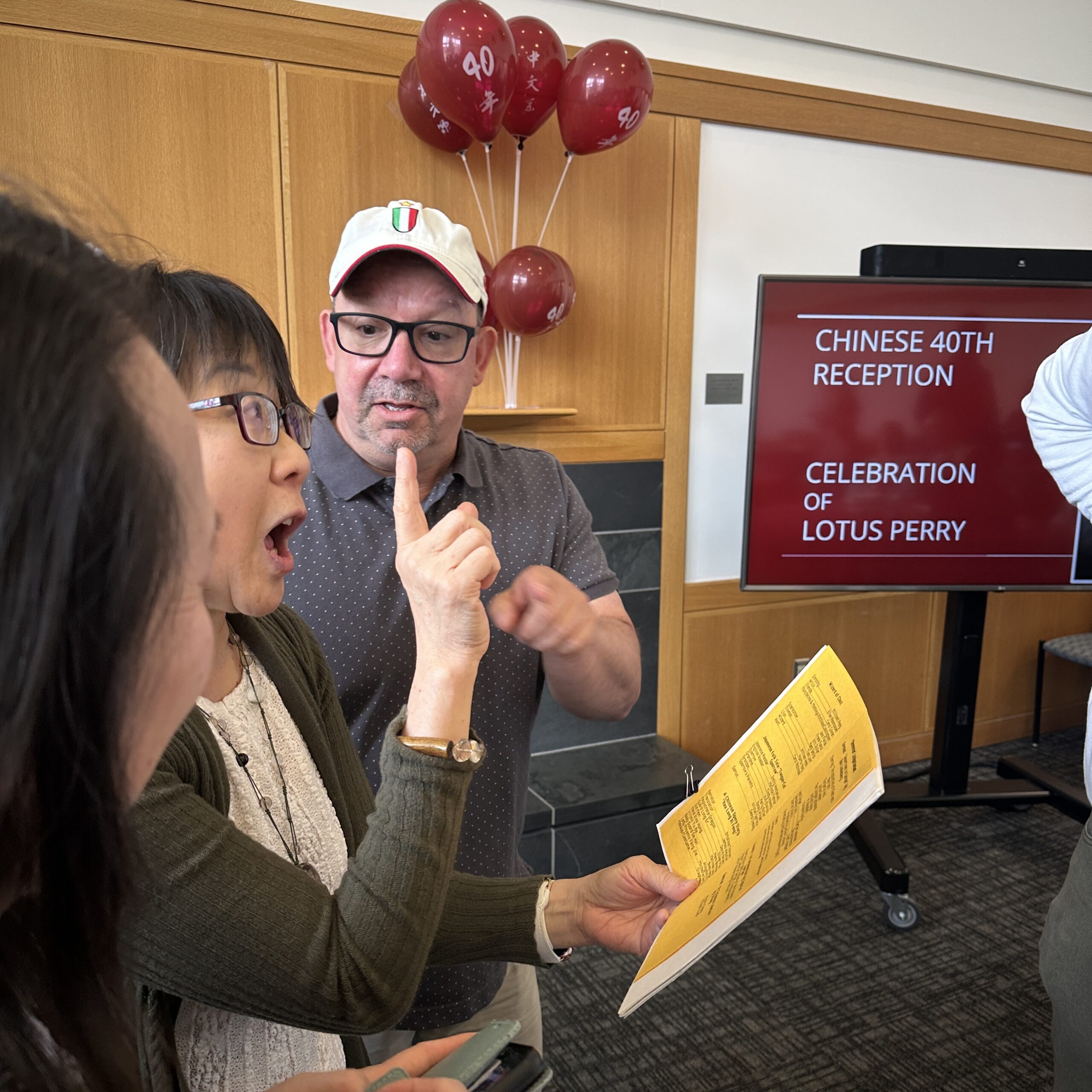
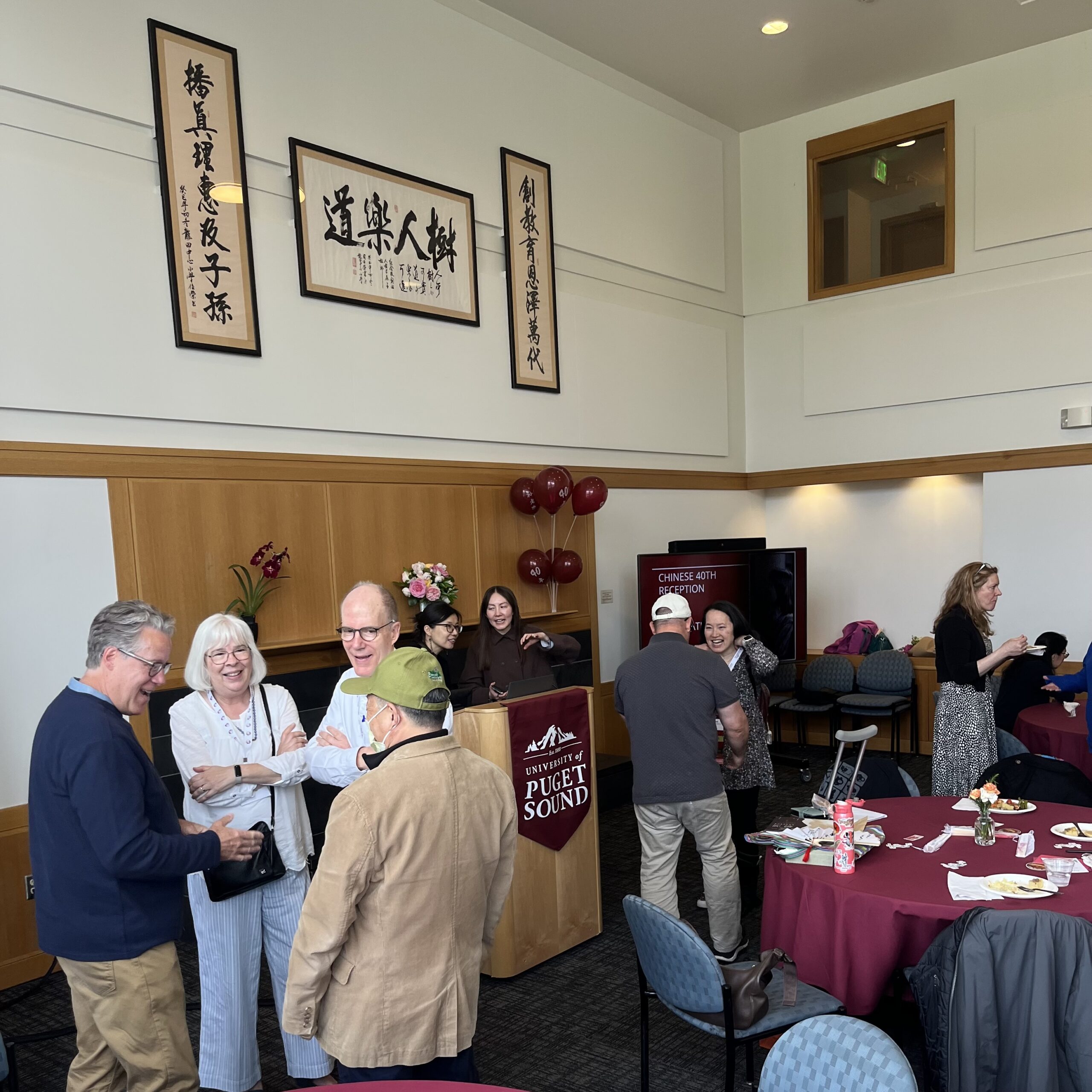
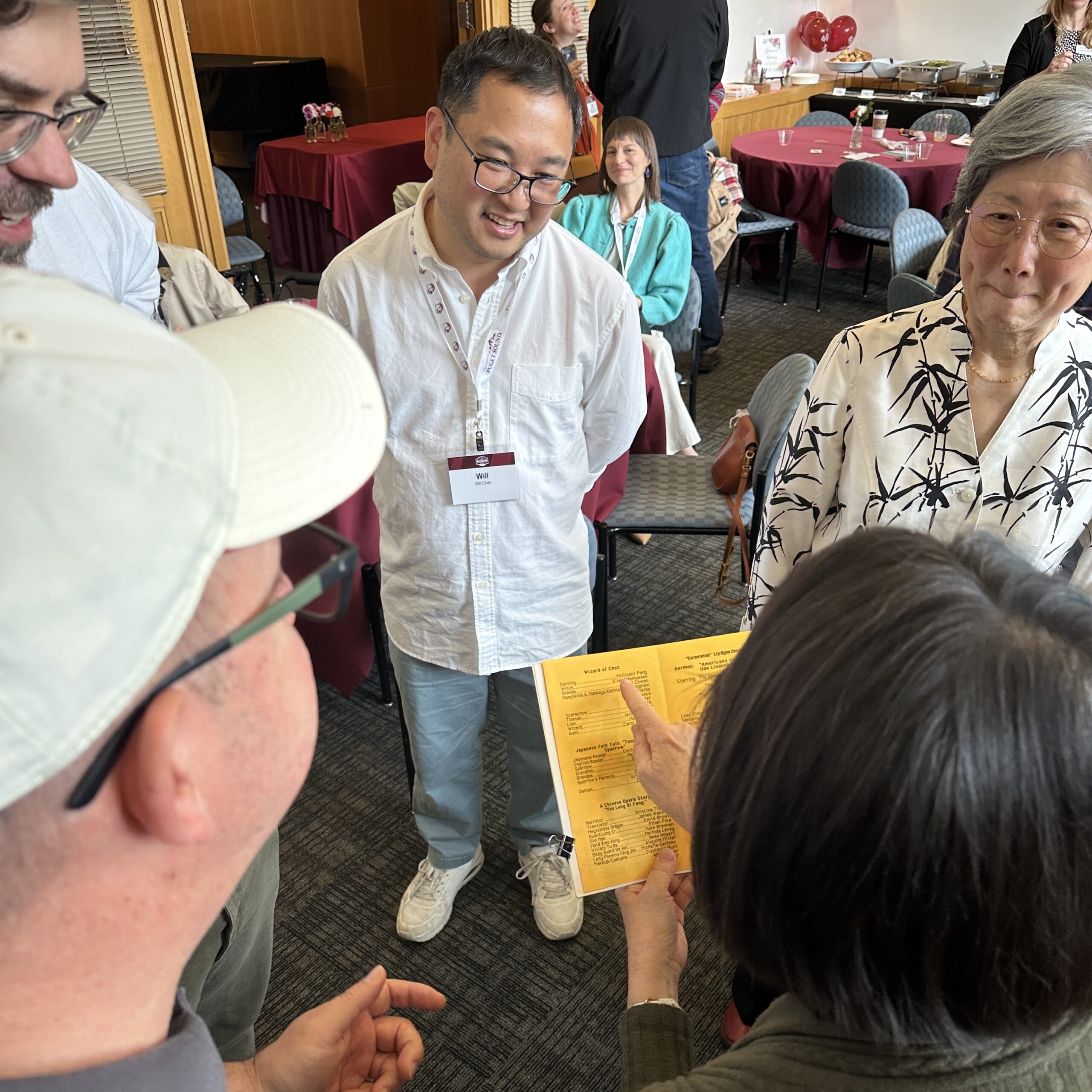
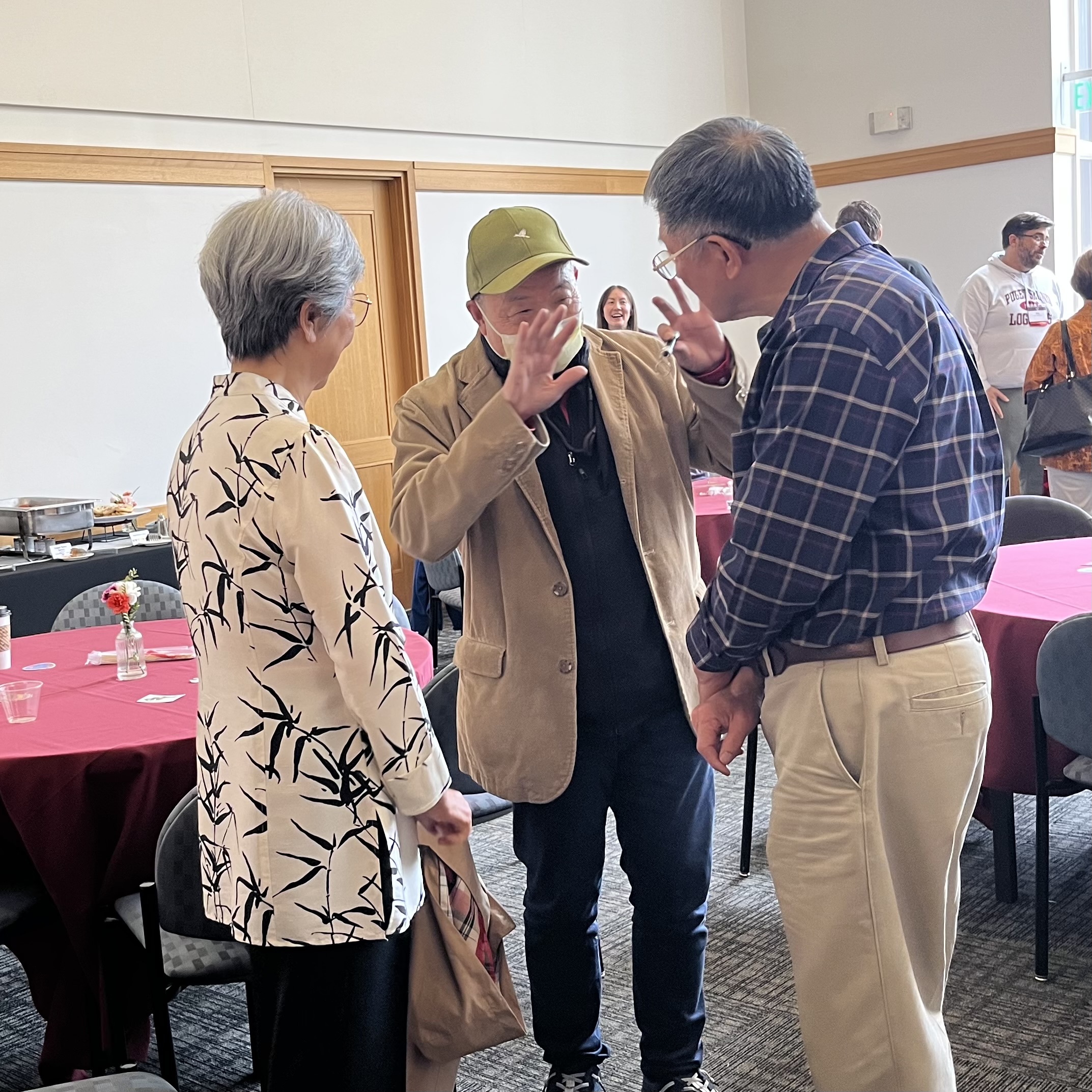
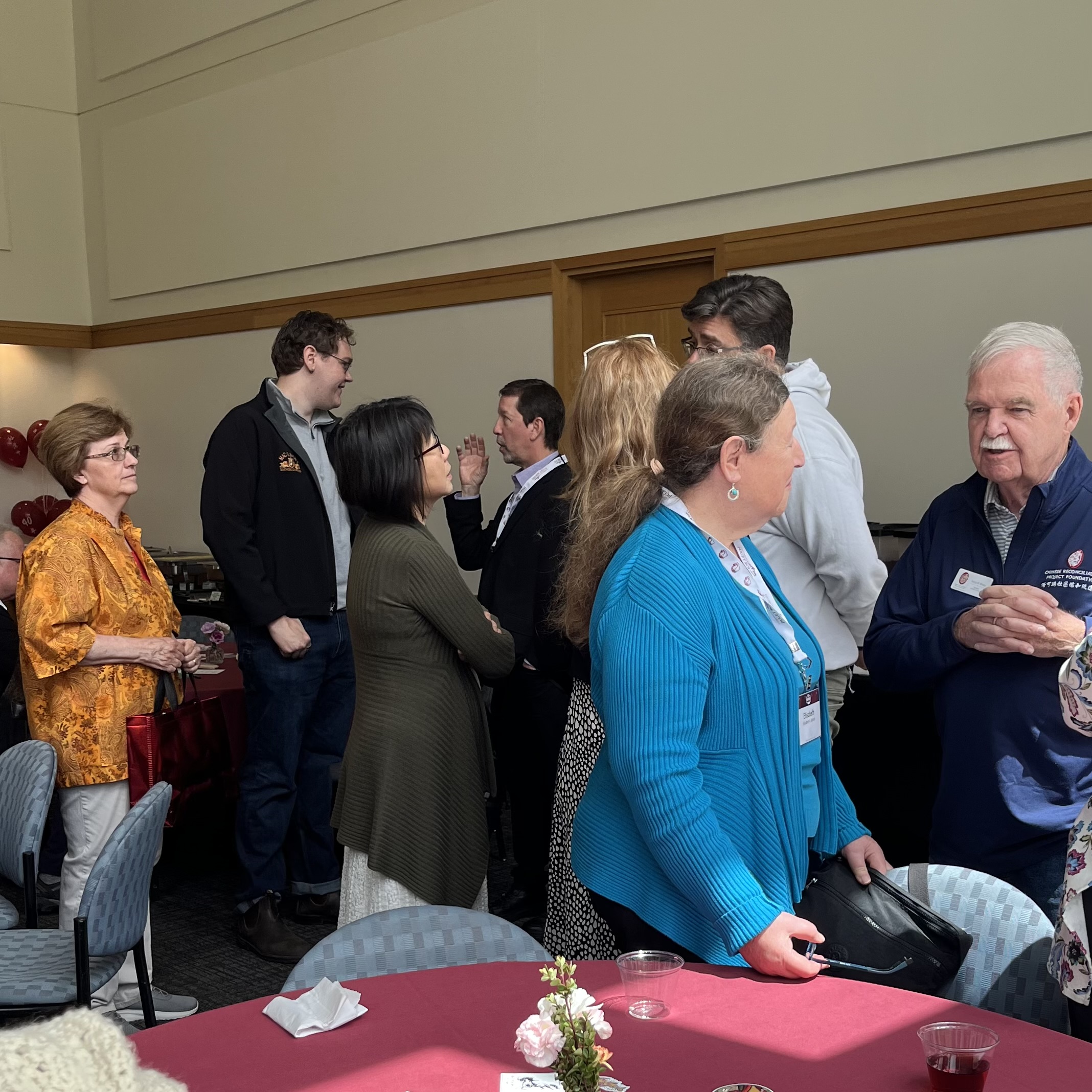
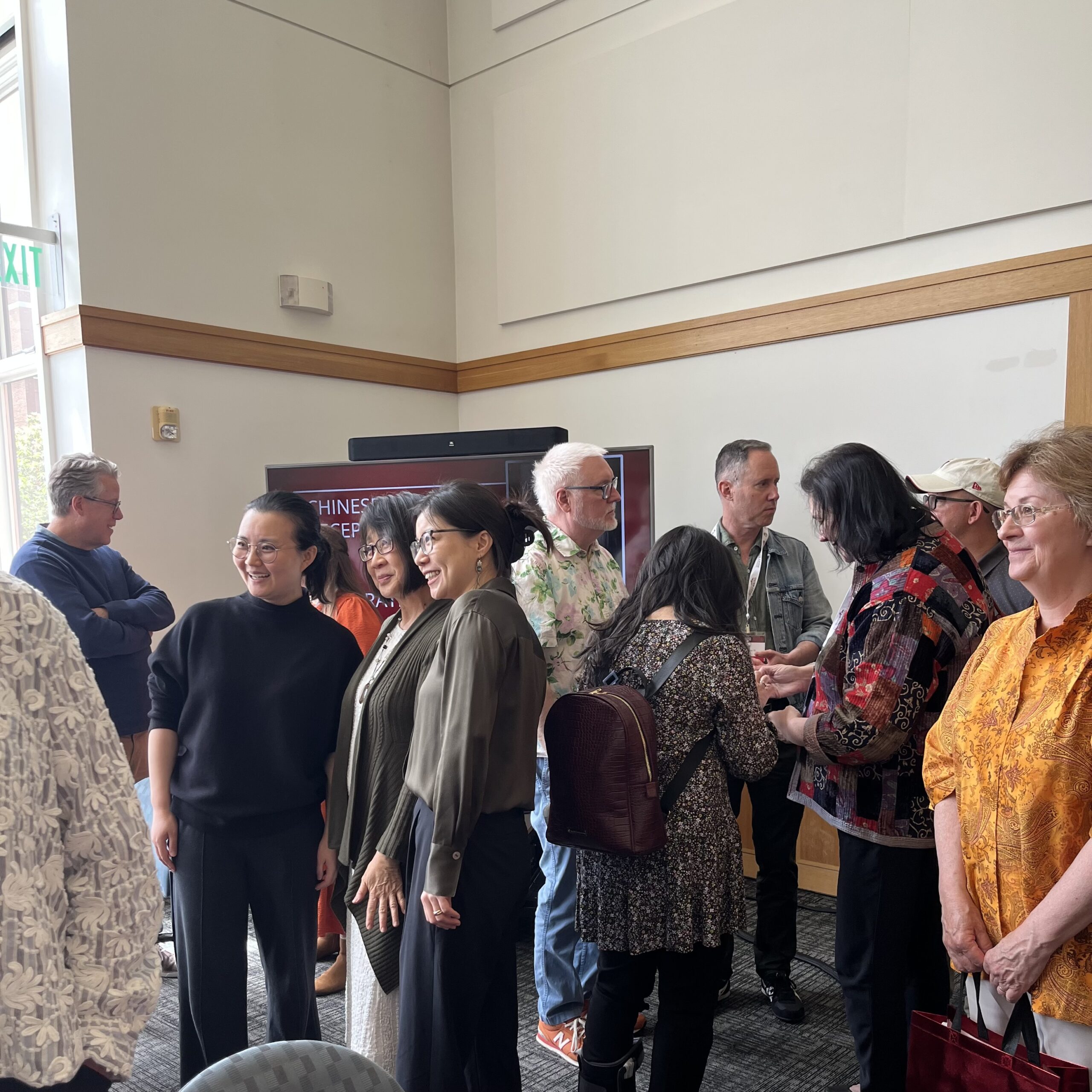
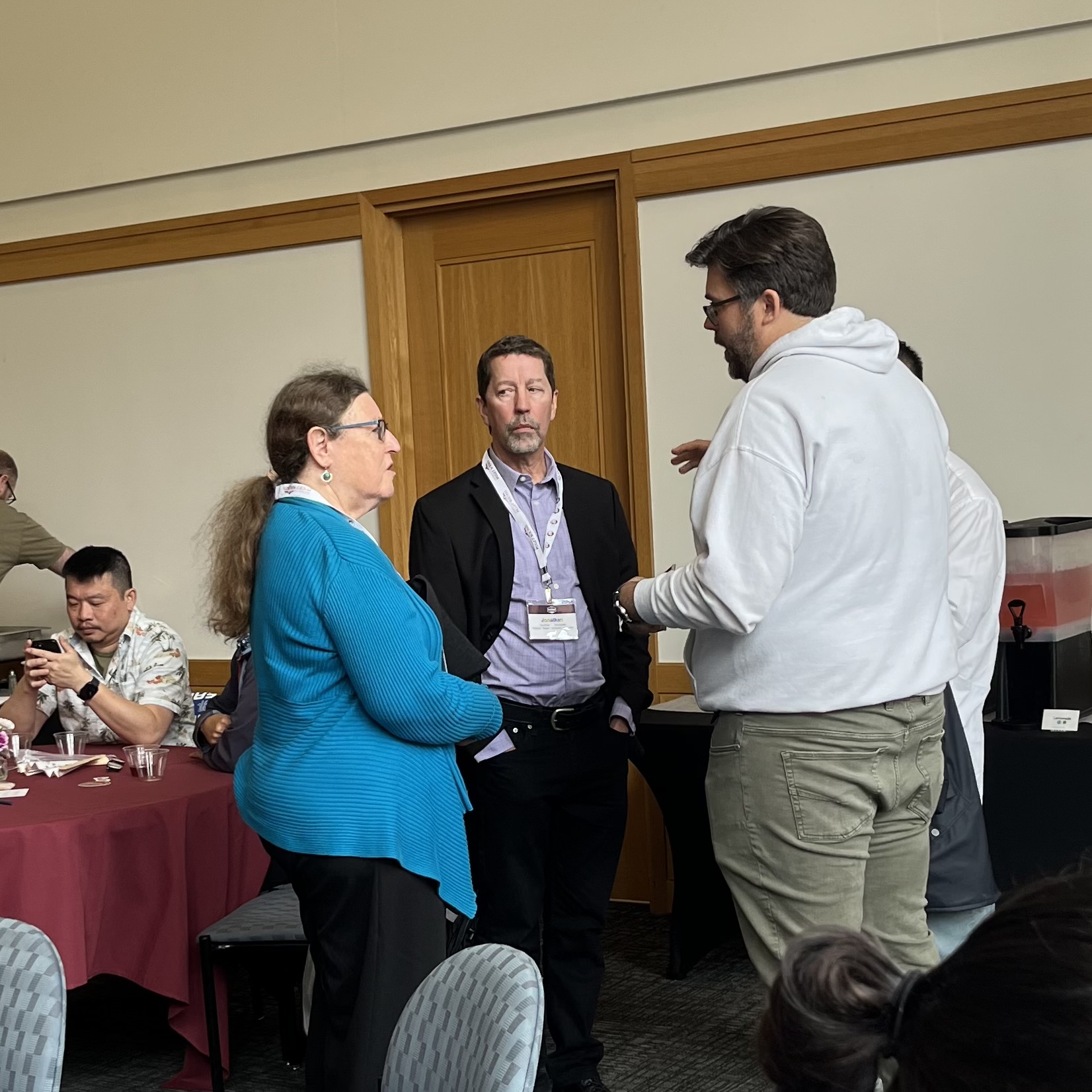
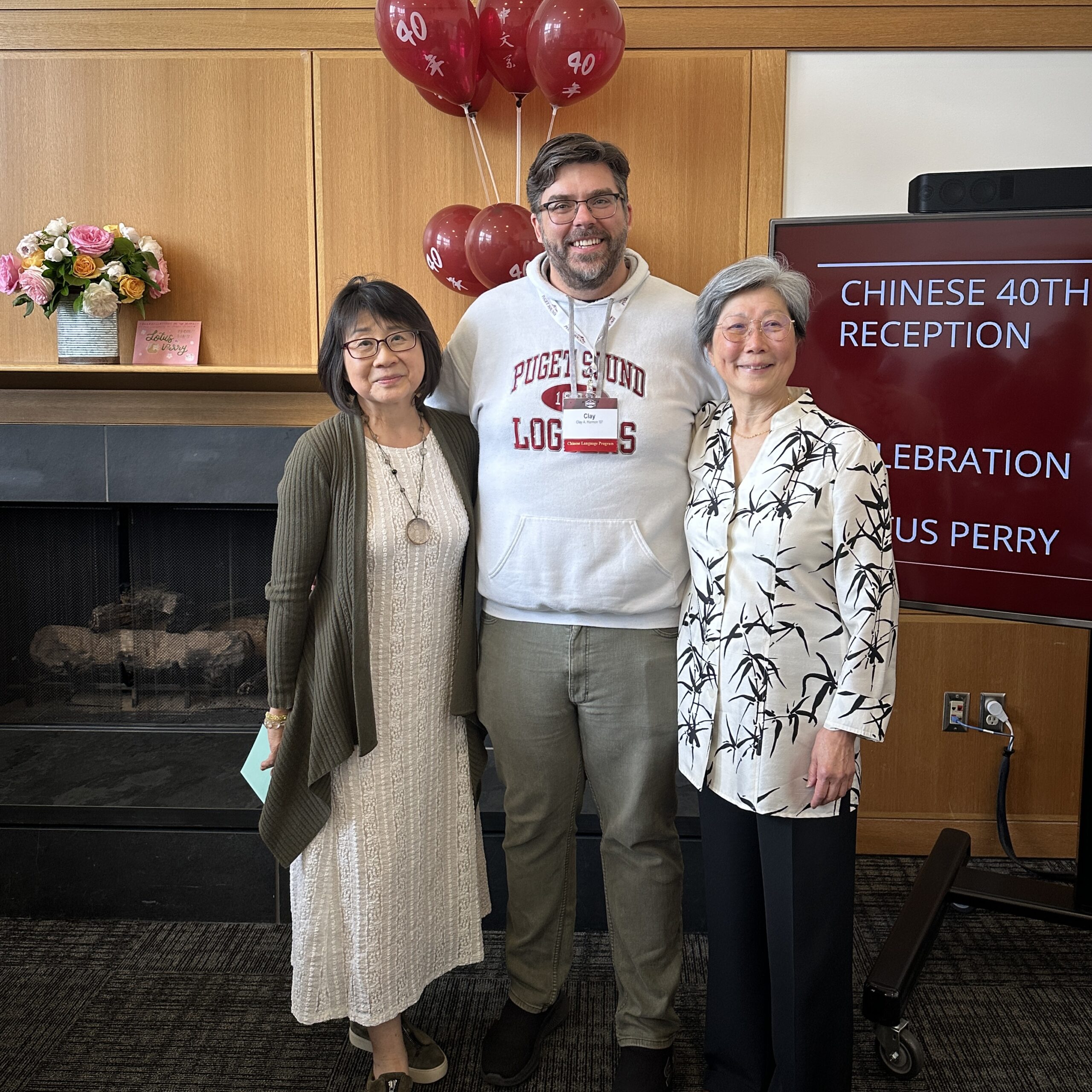
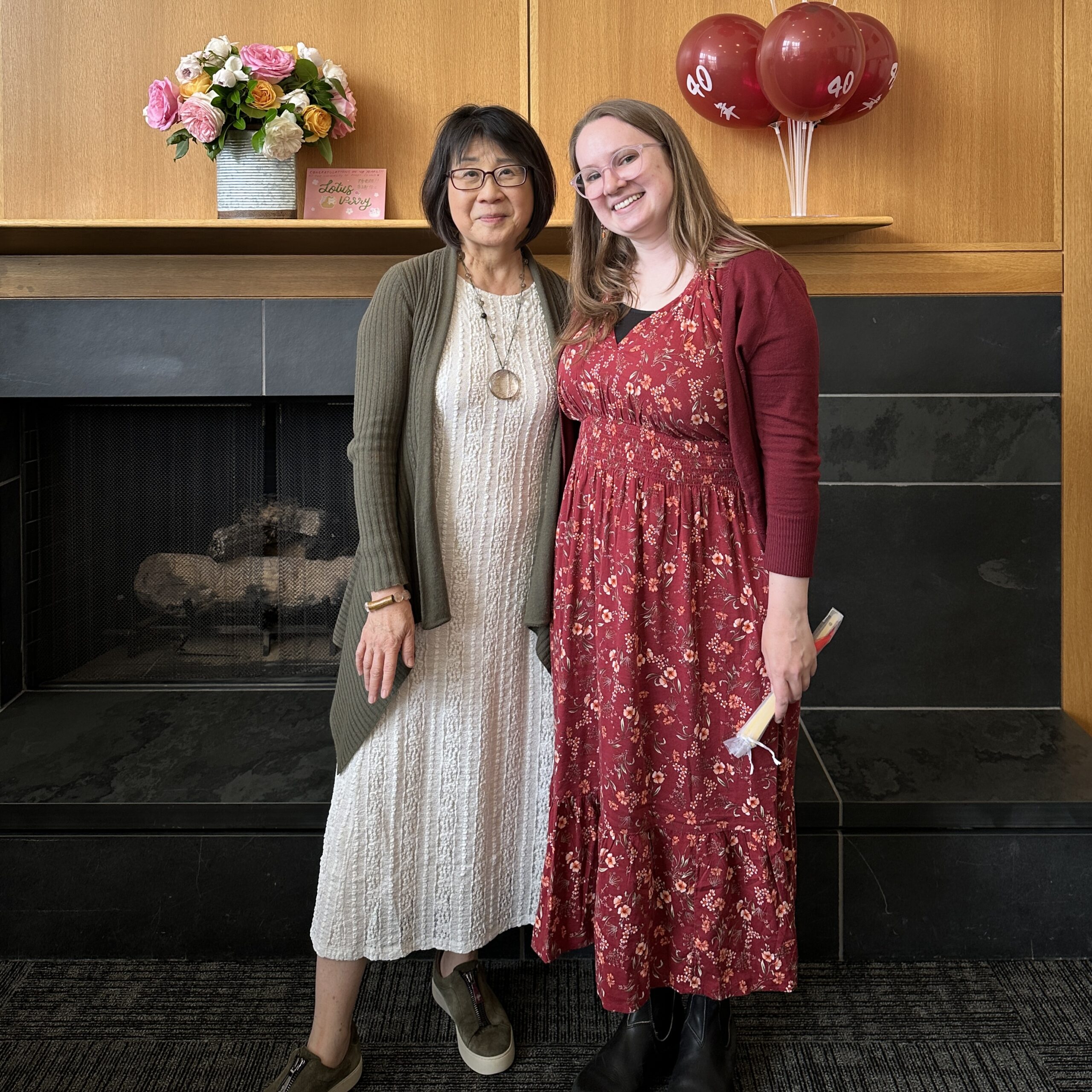
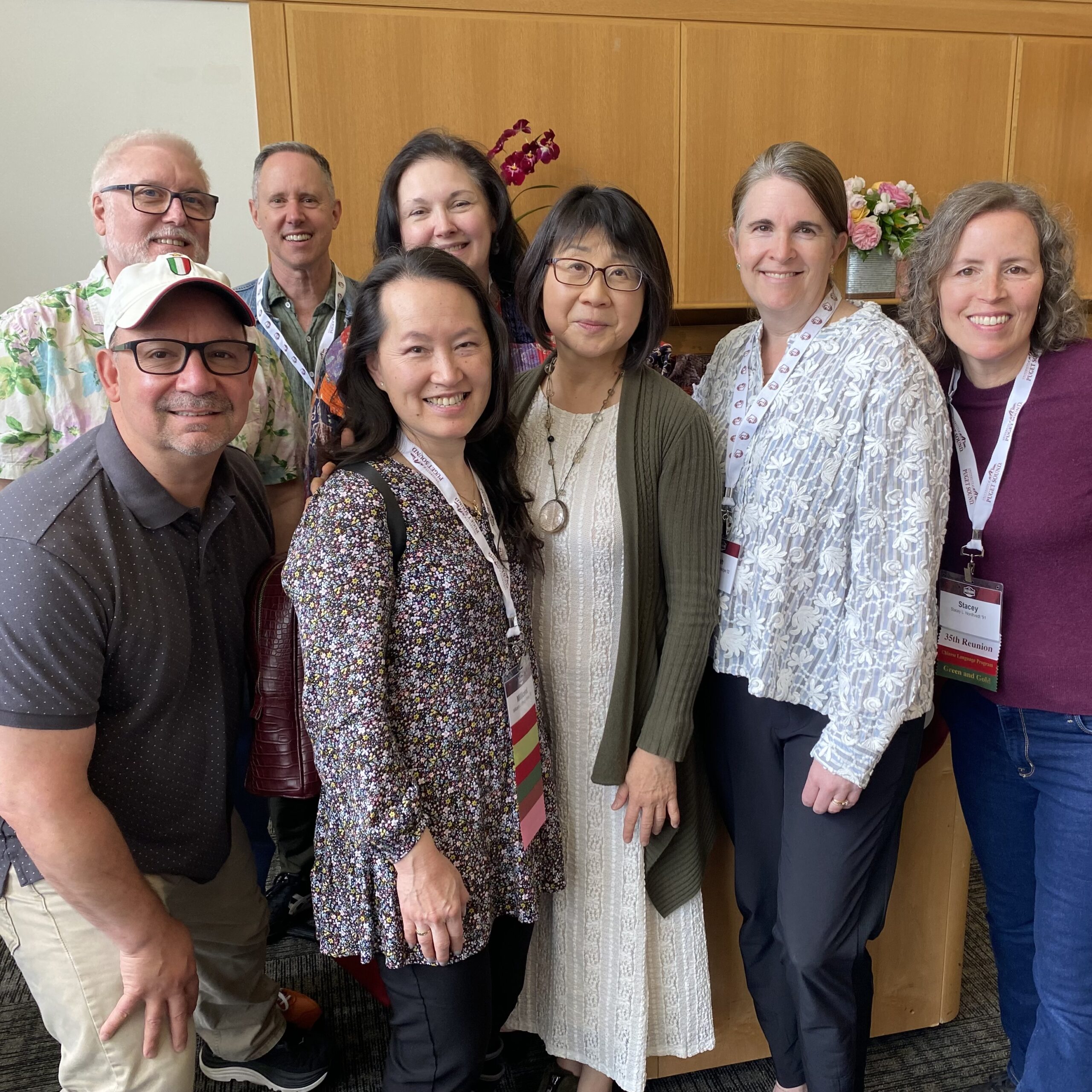
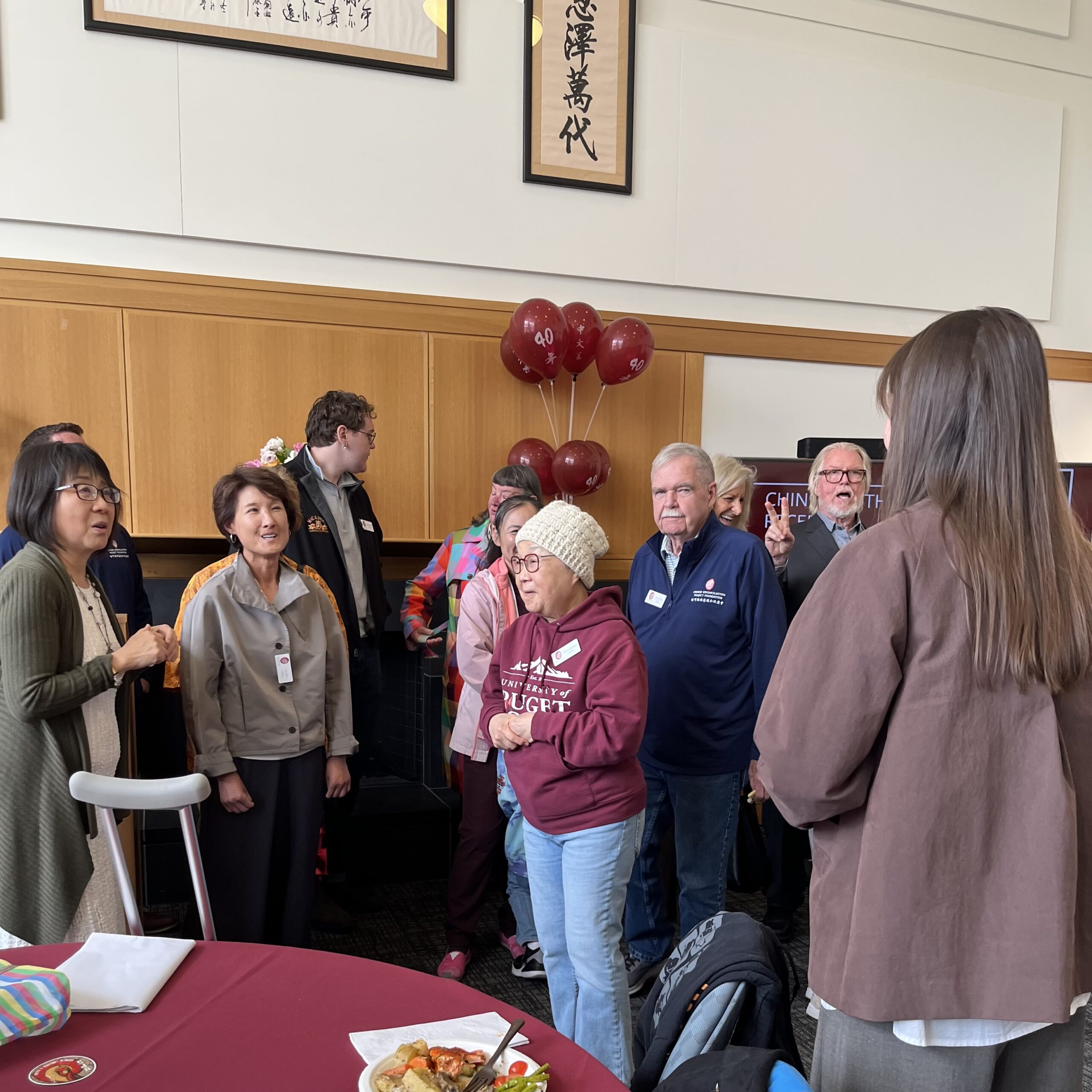
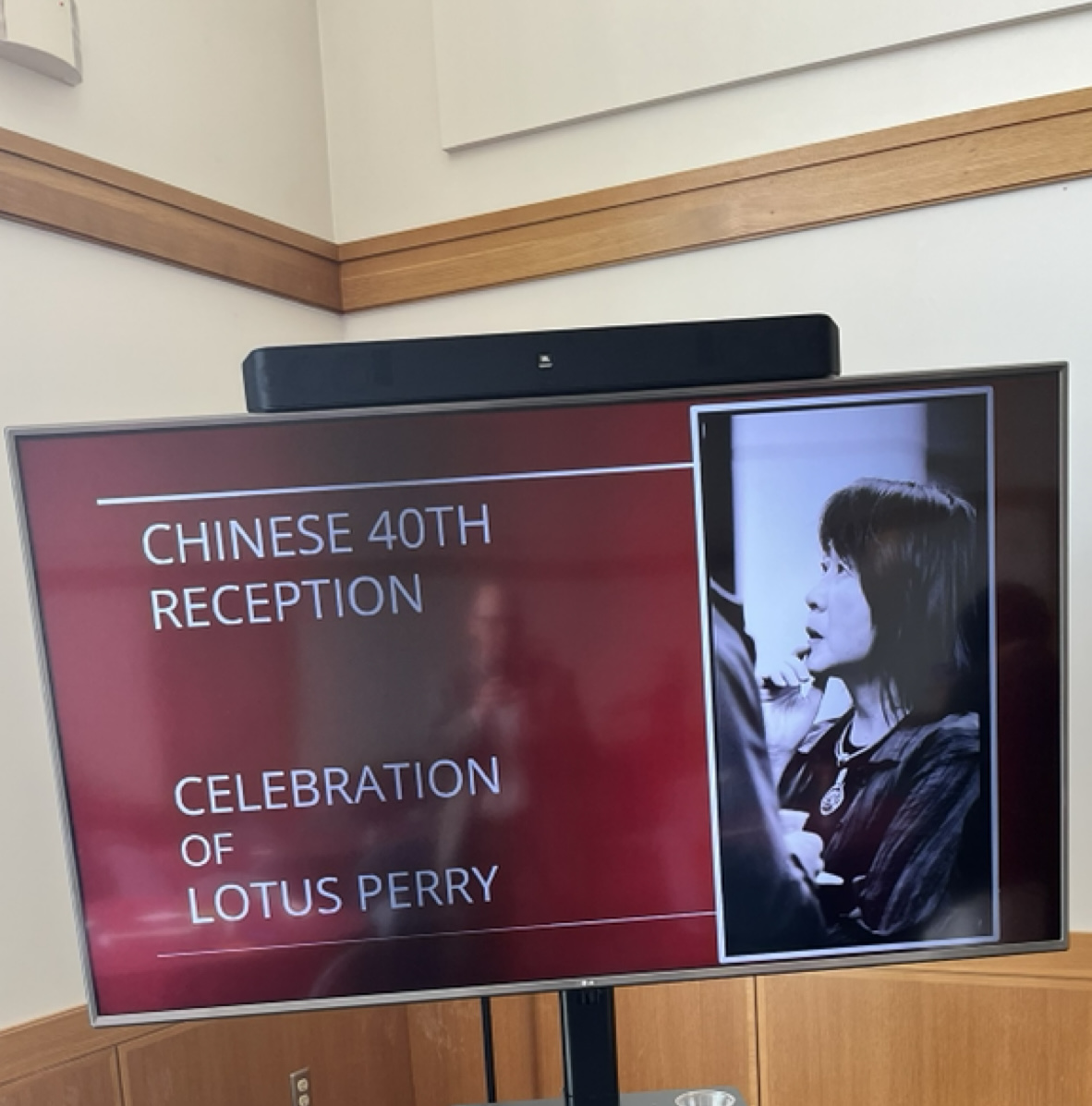
40th Anniversary Celebration Recap & Photo Gallery

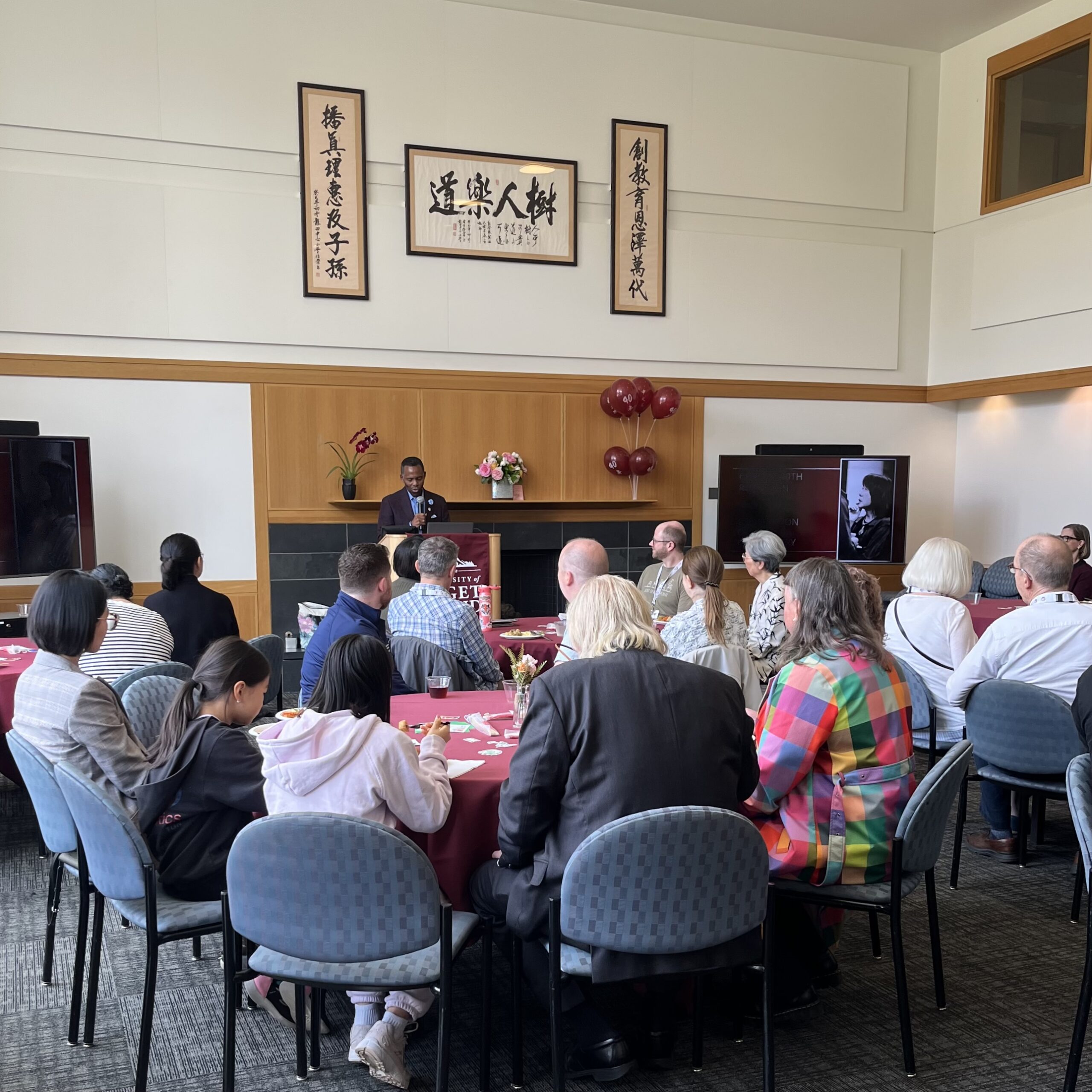
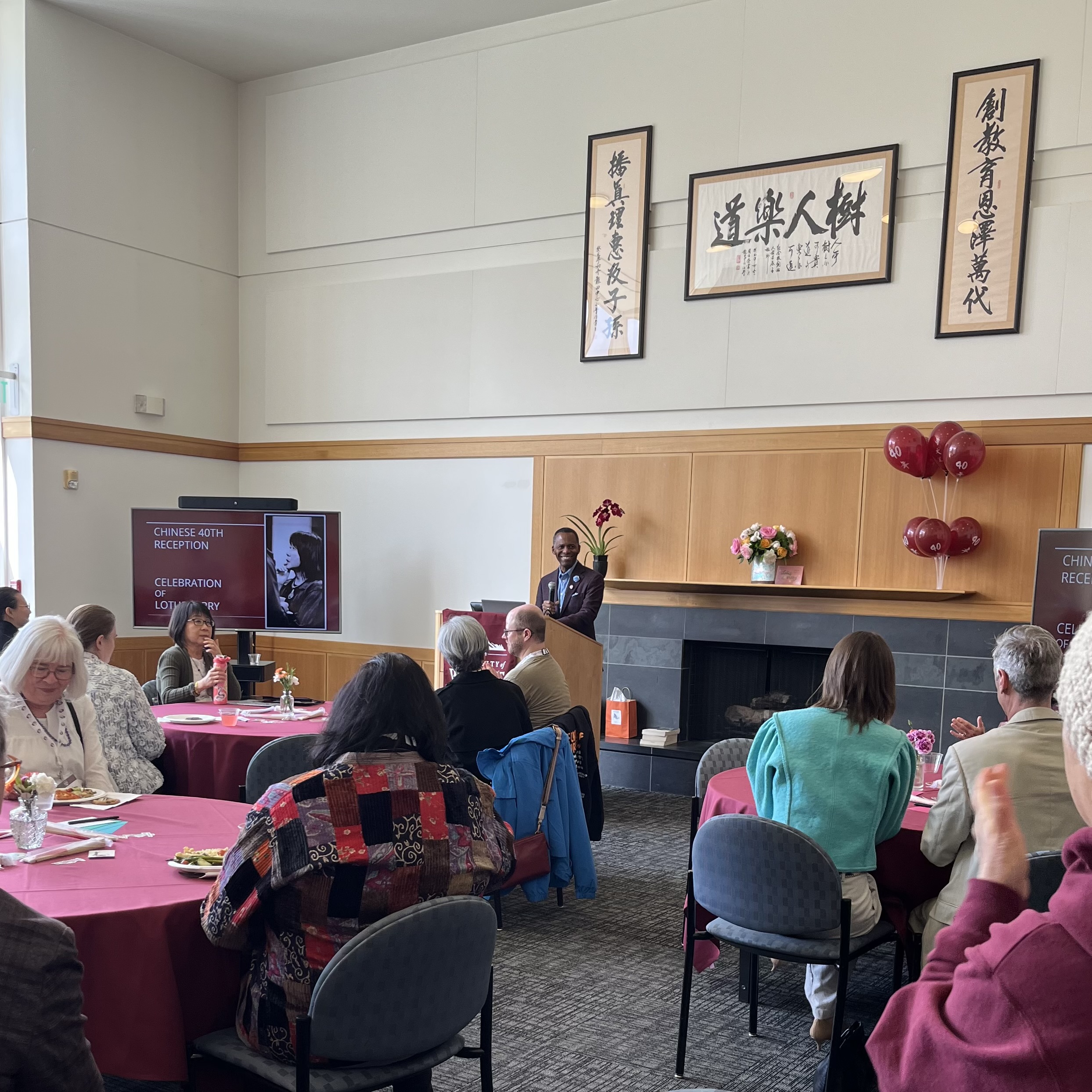
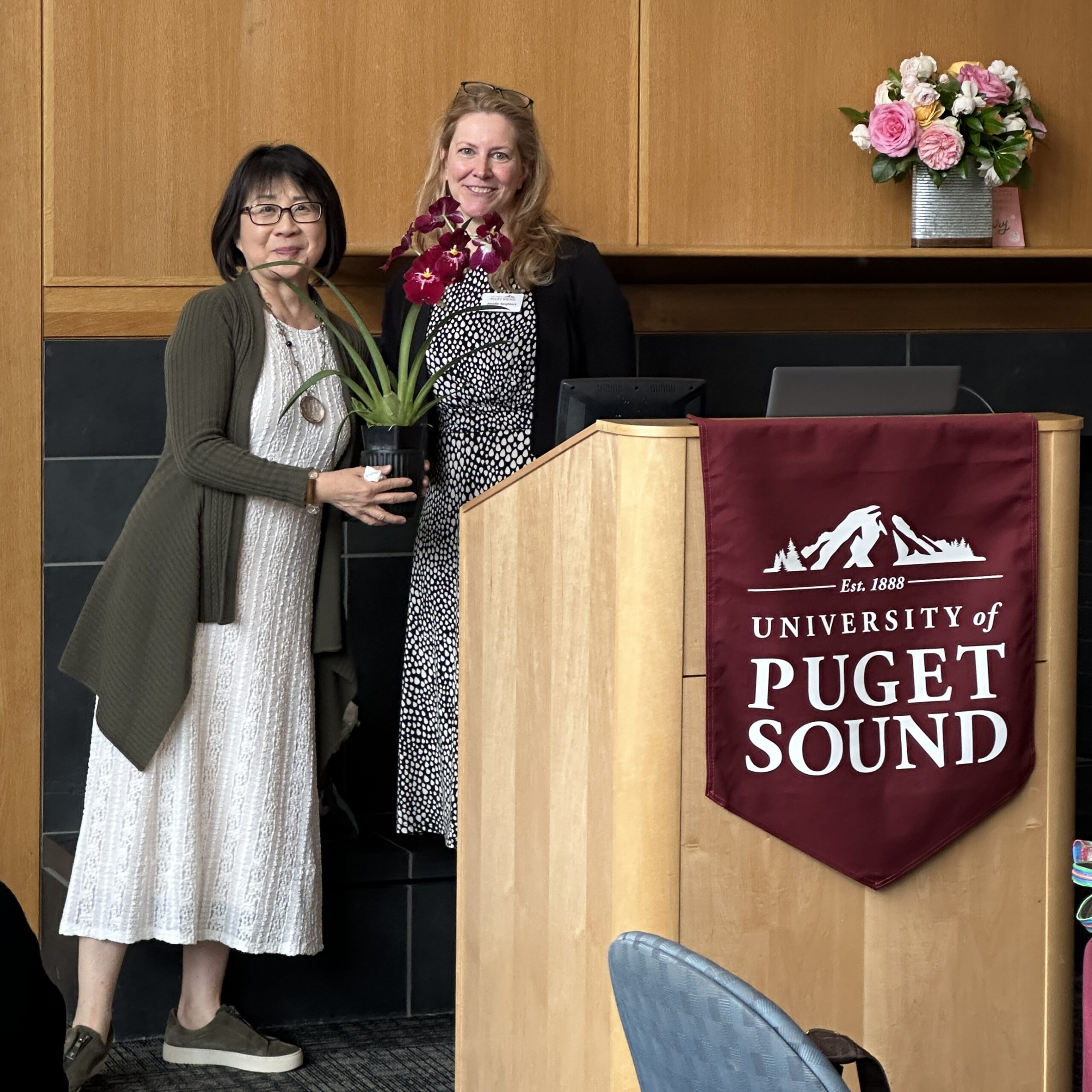
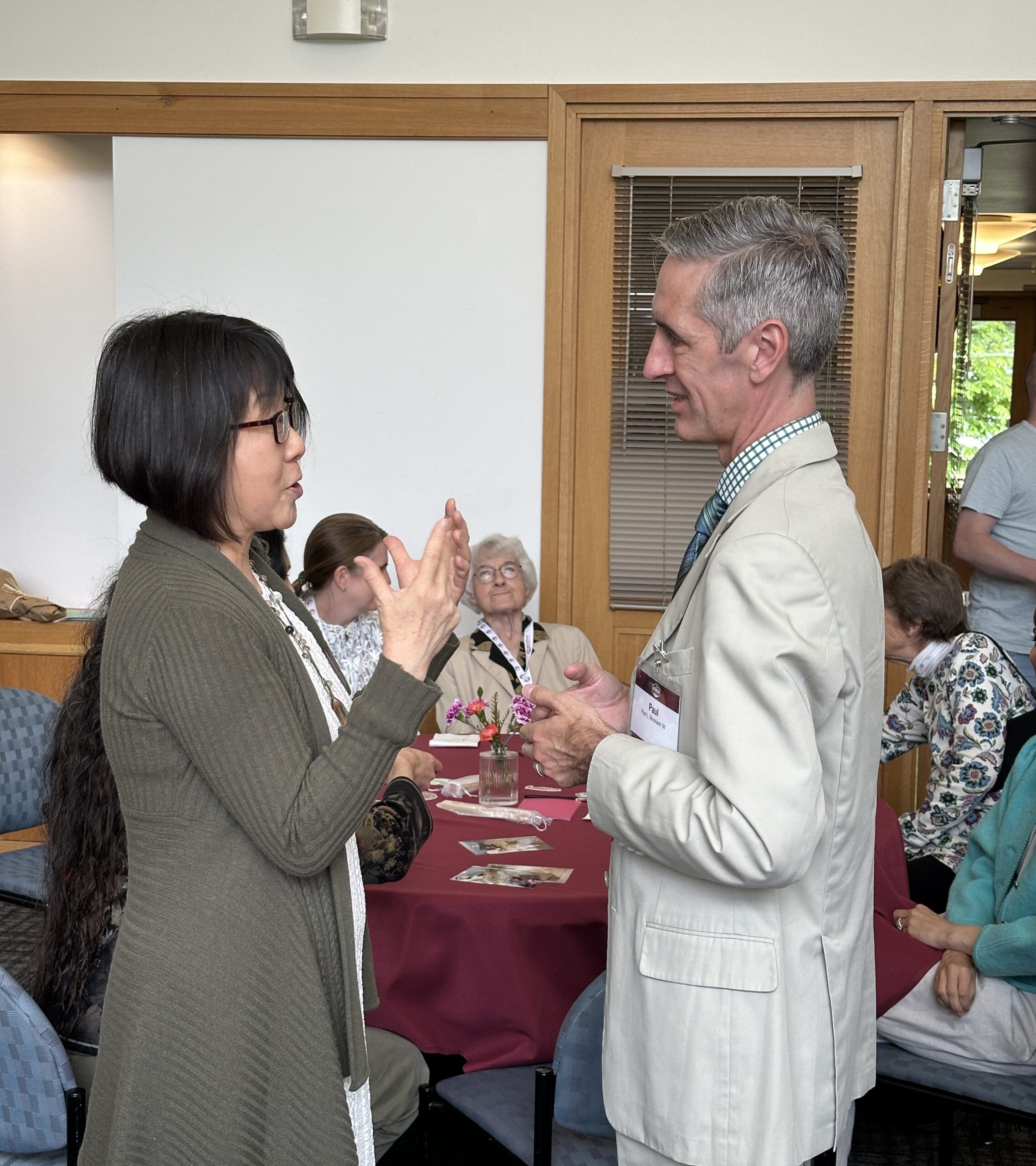
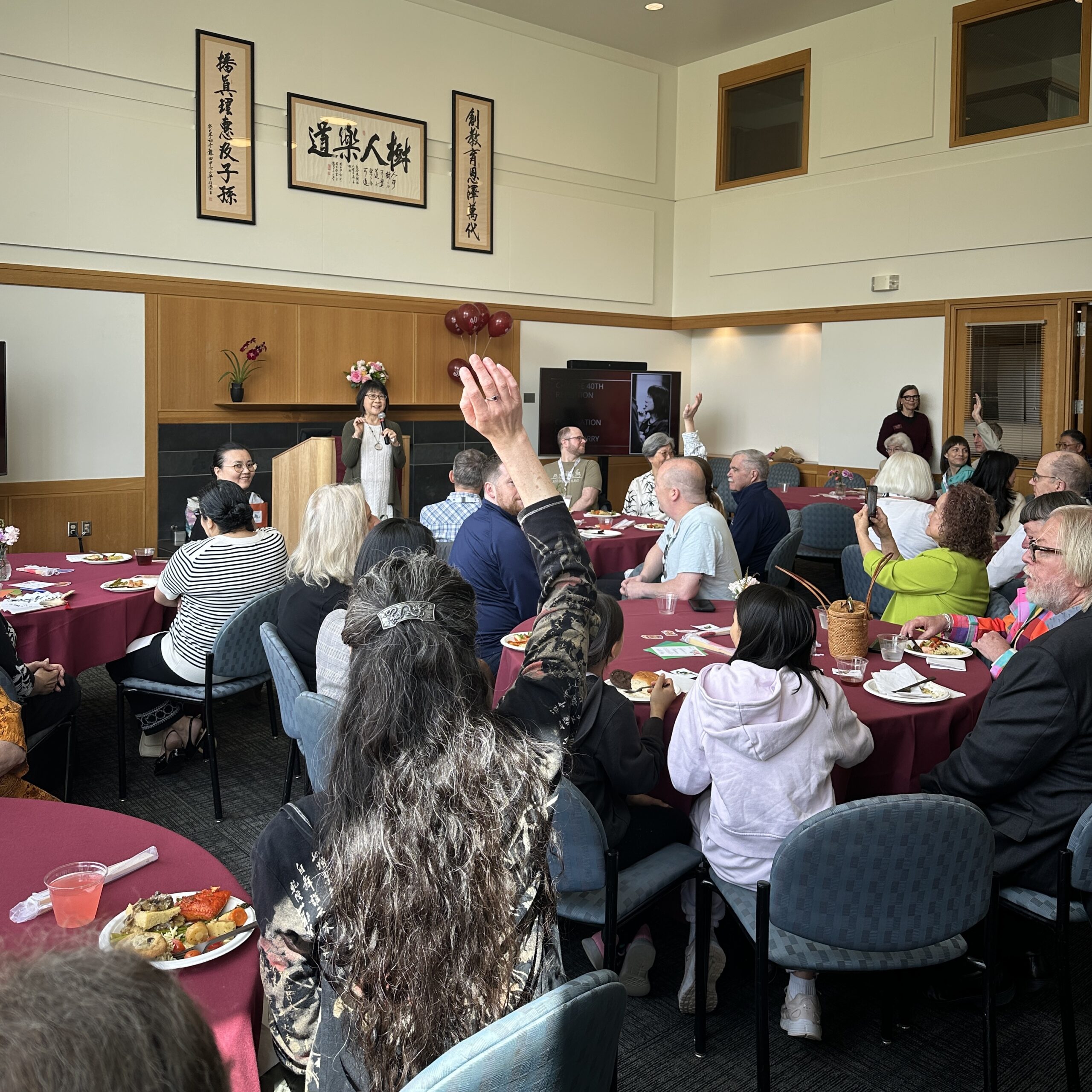
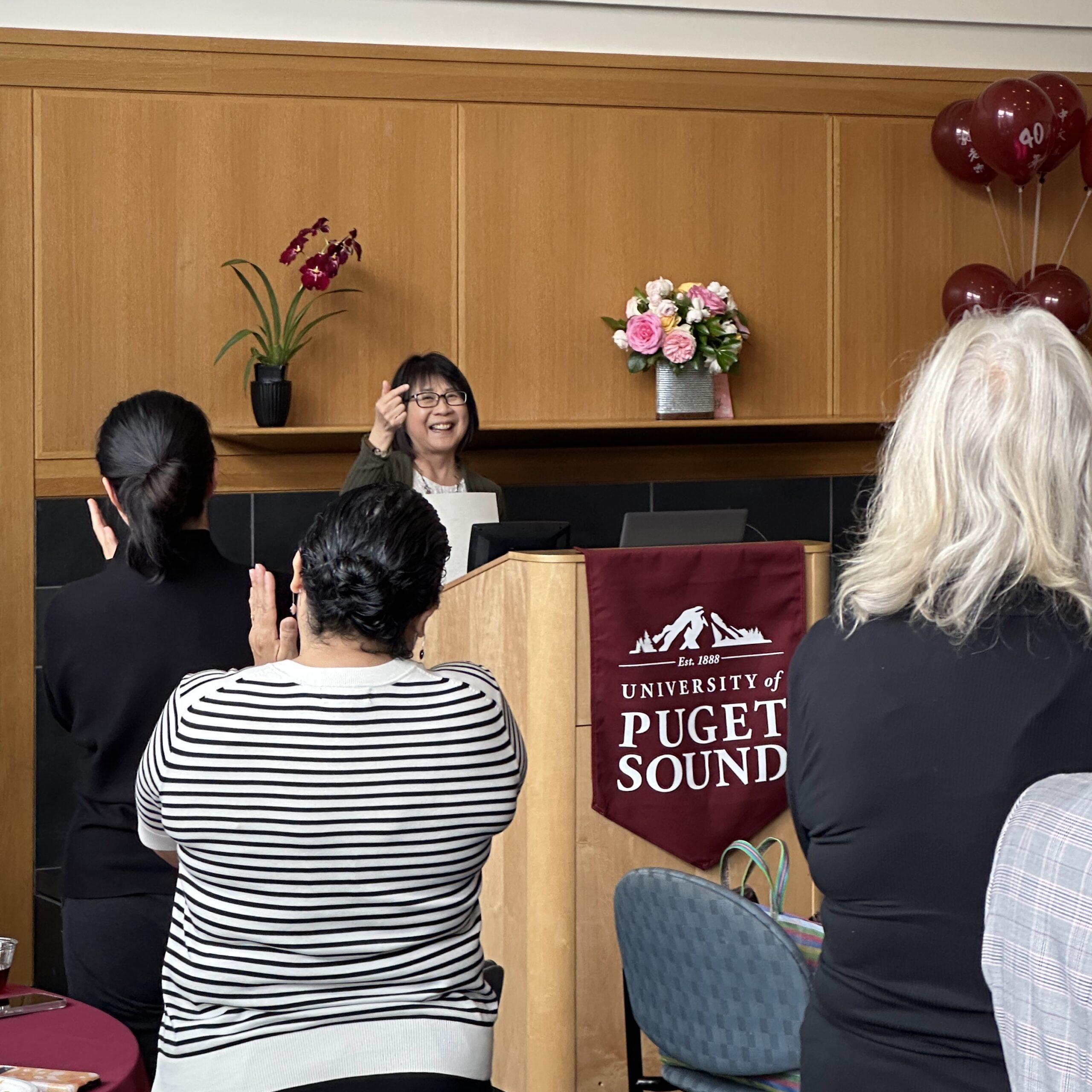
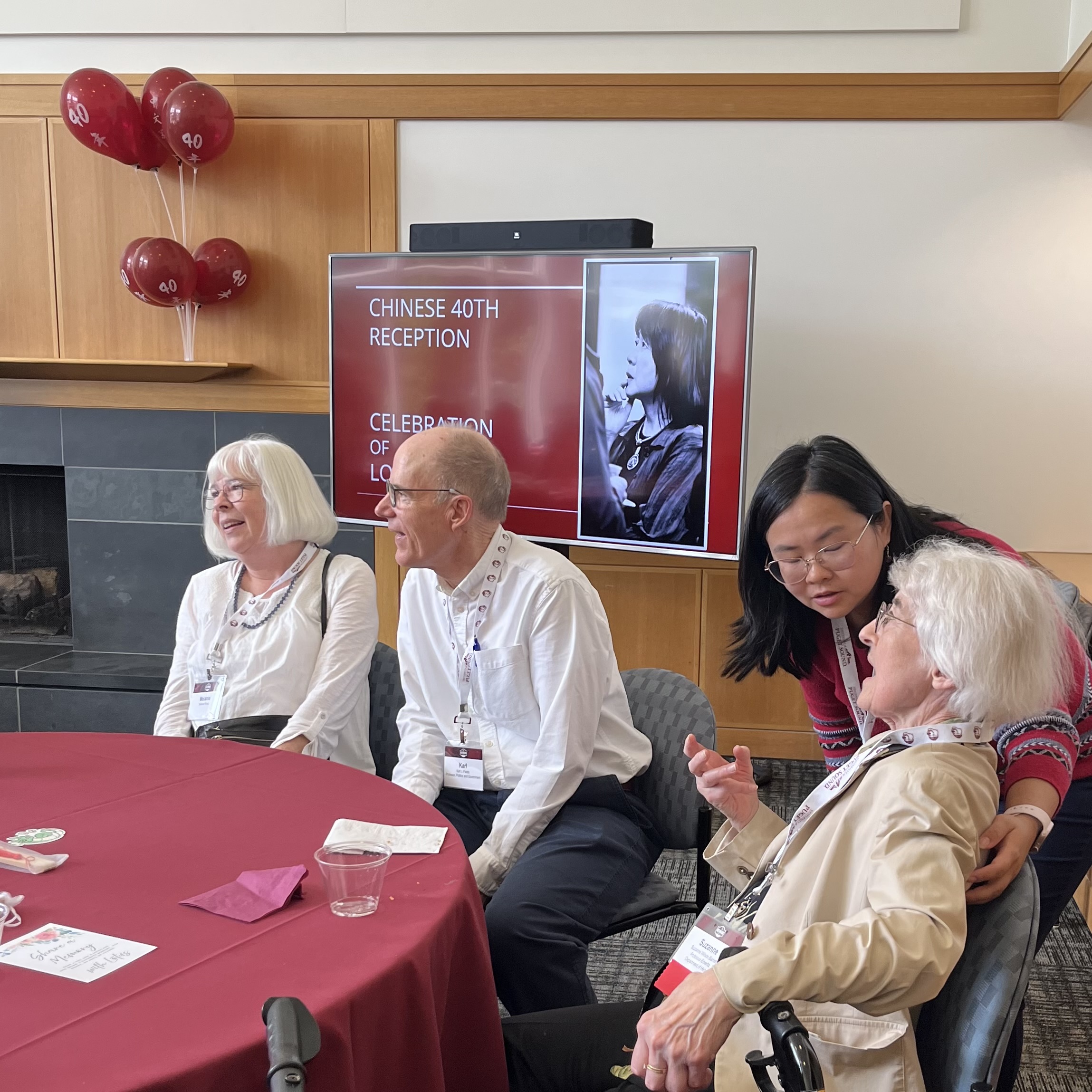
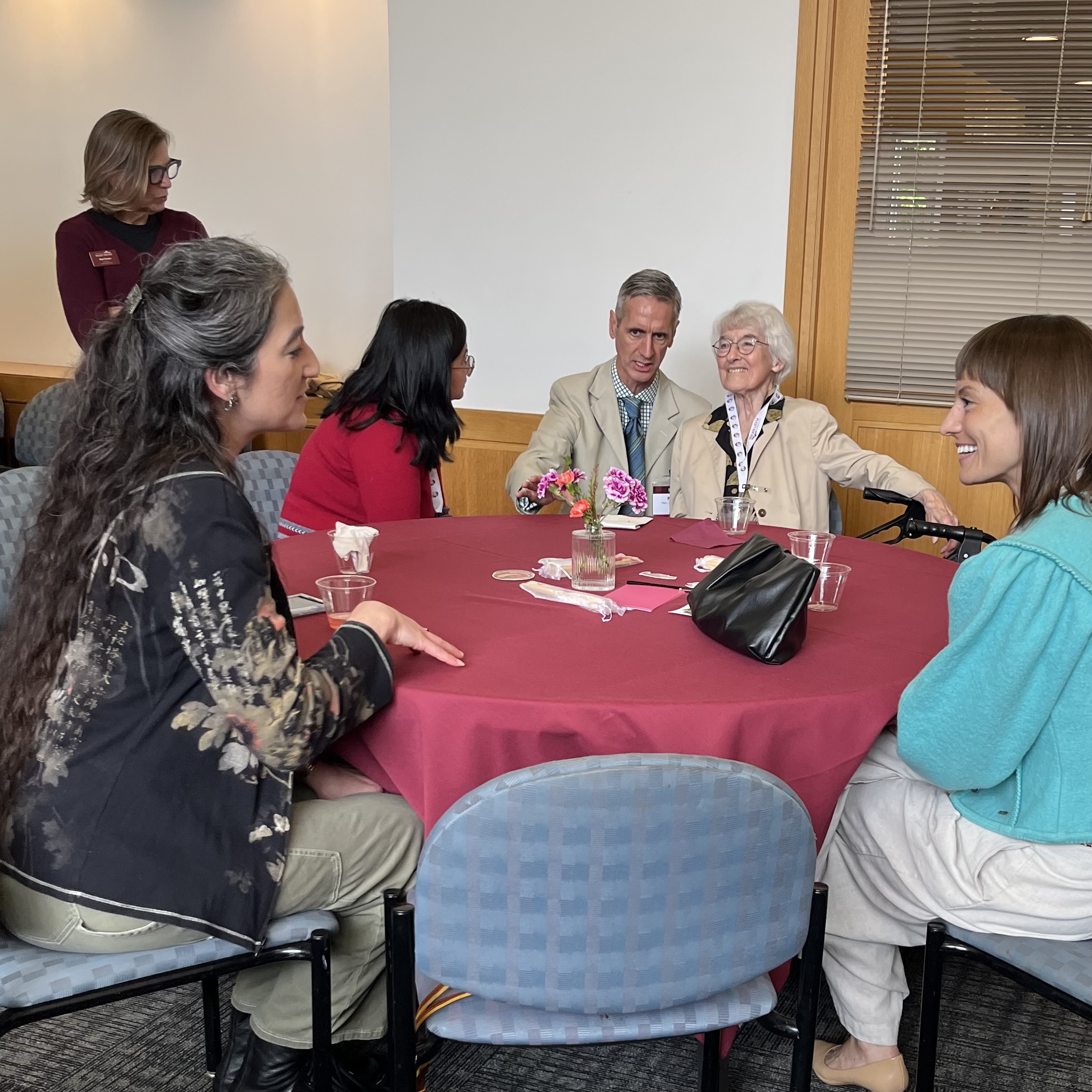
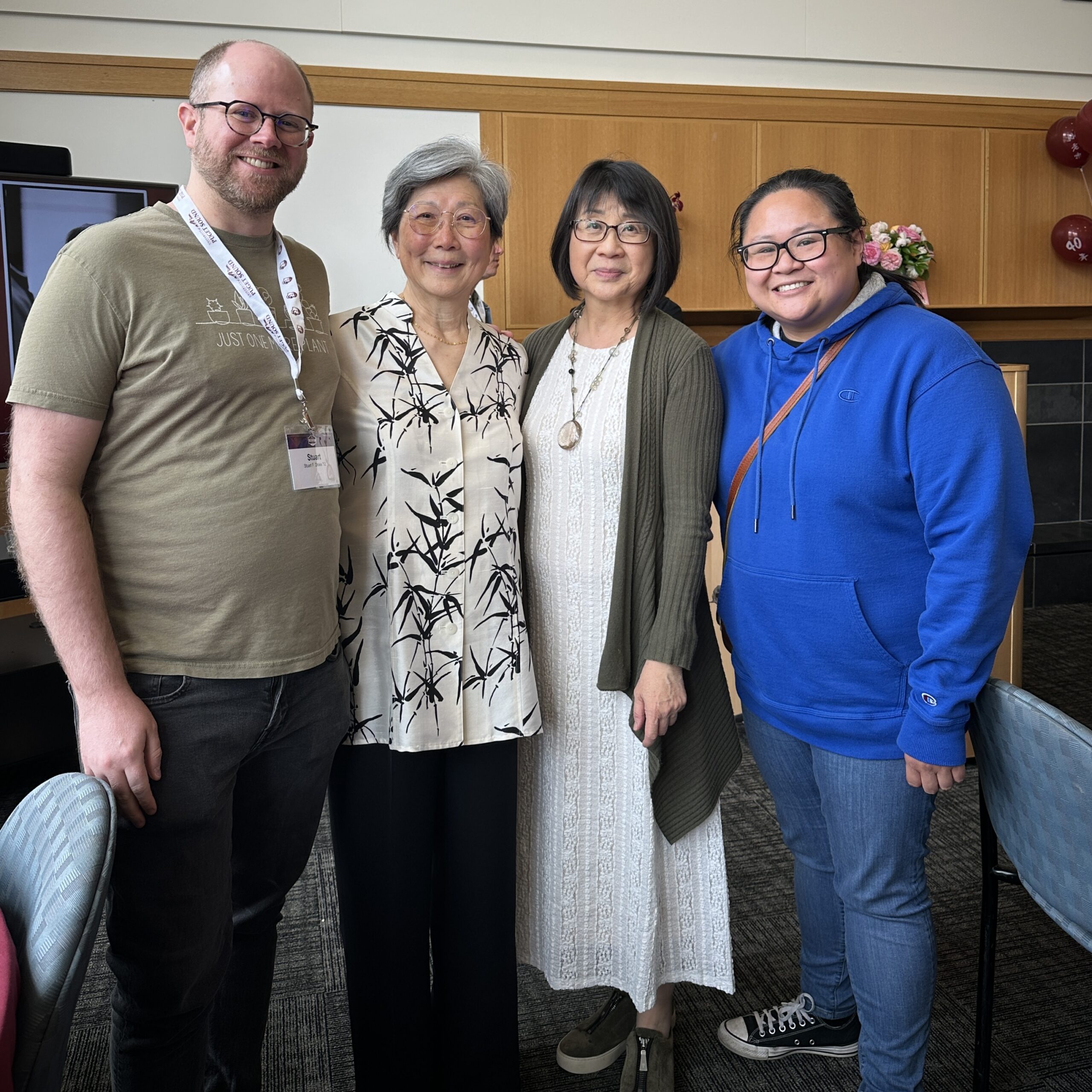
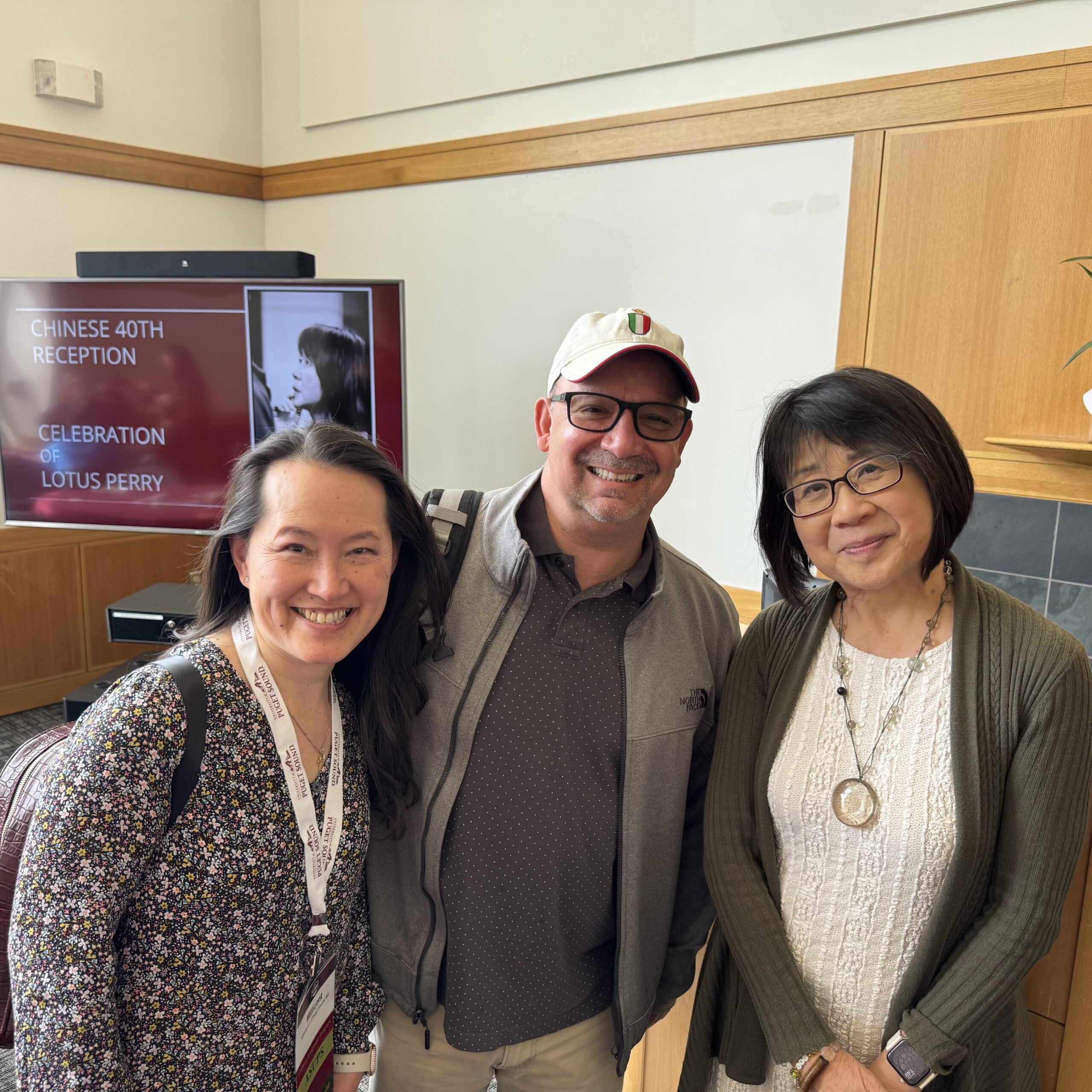
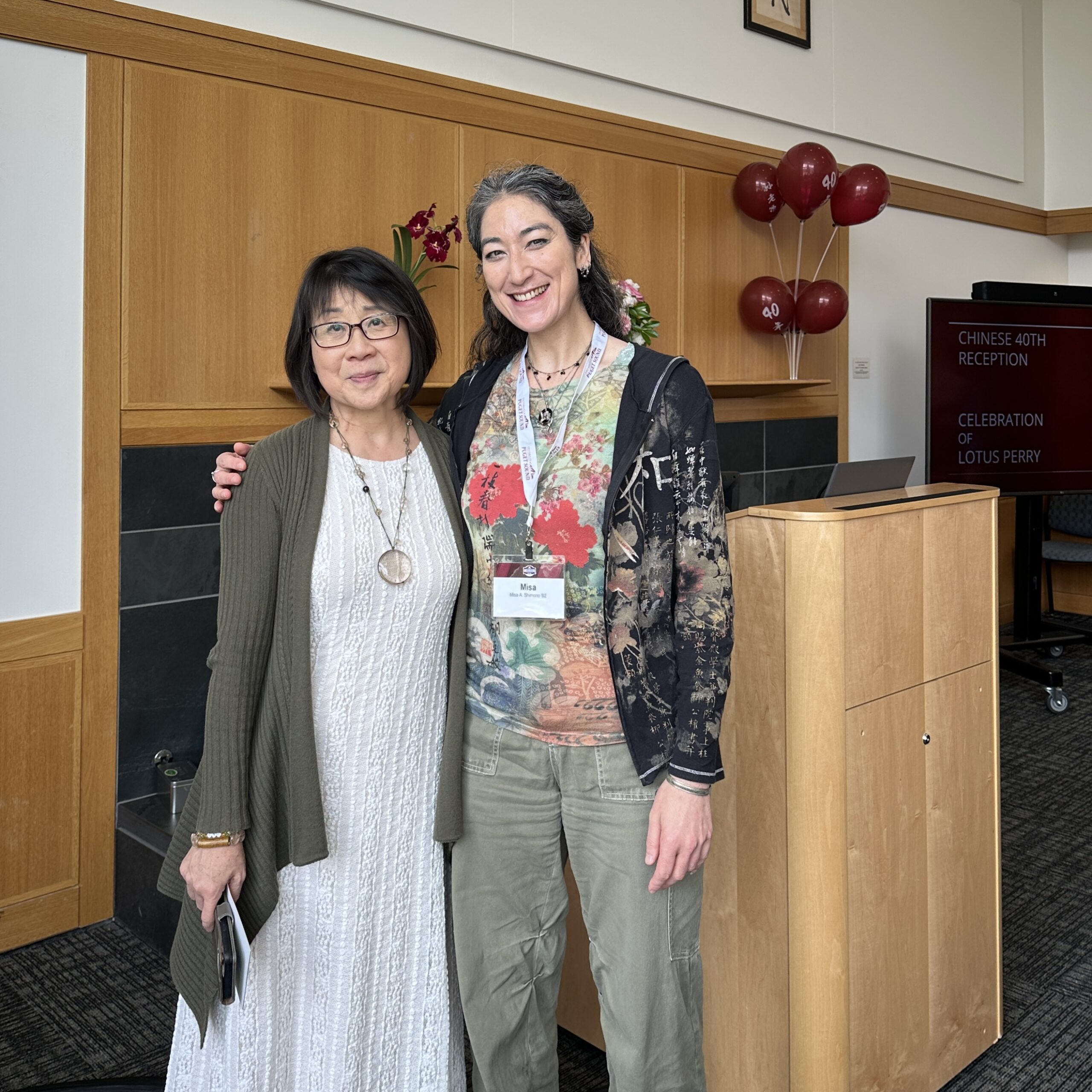
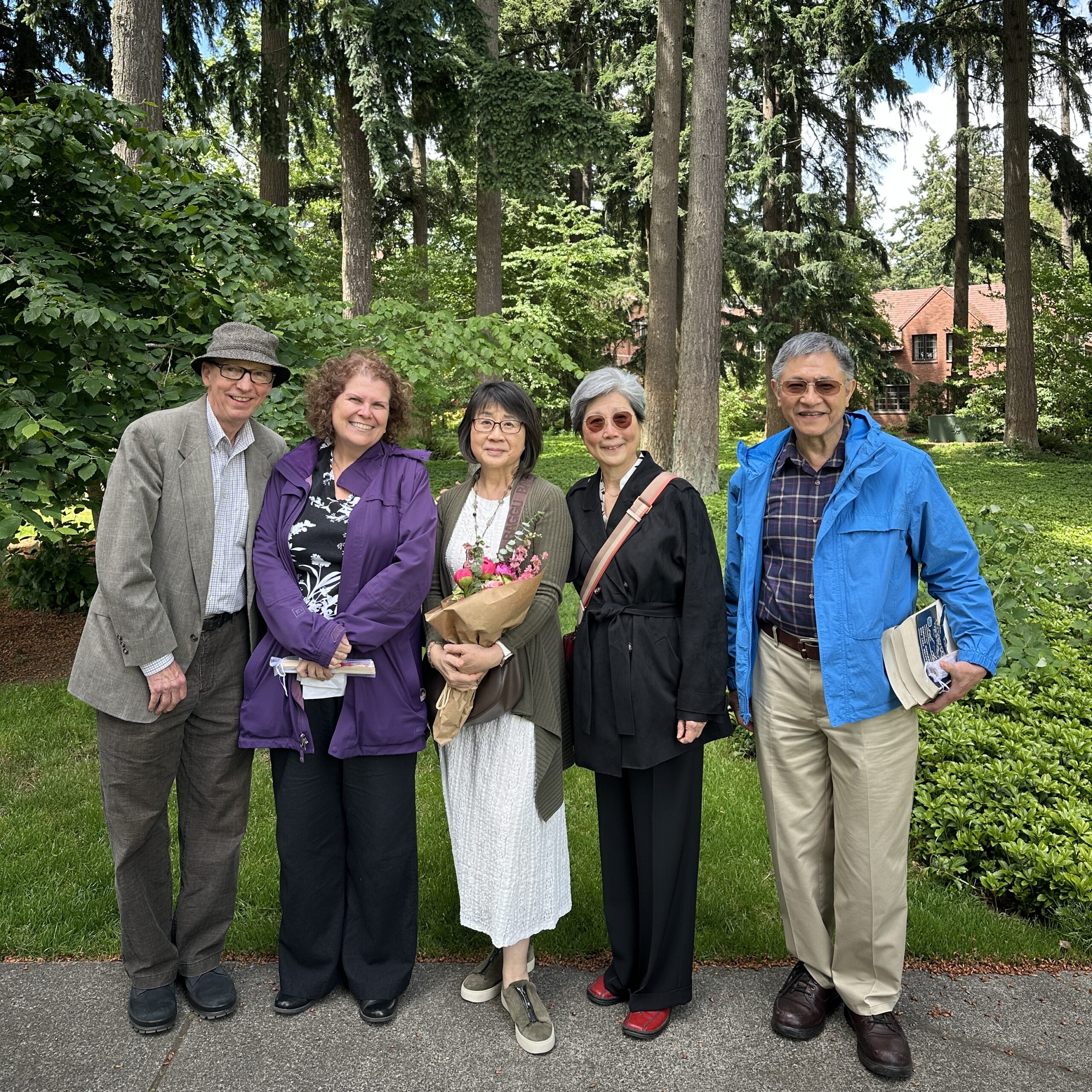
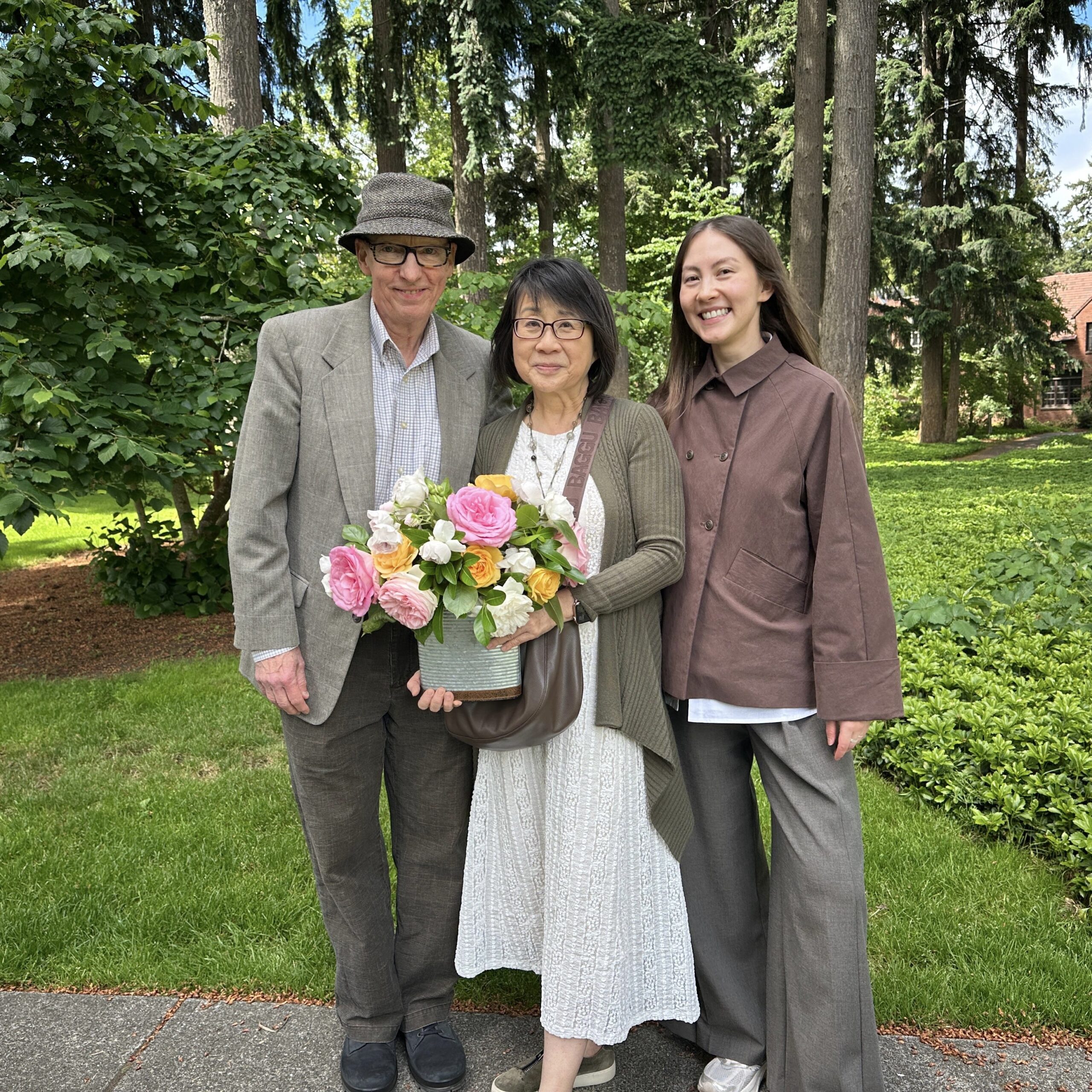
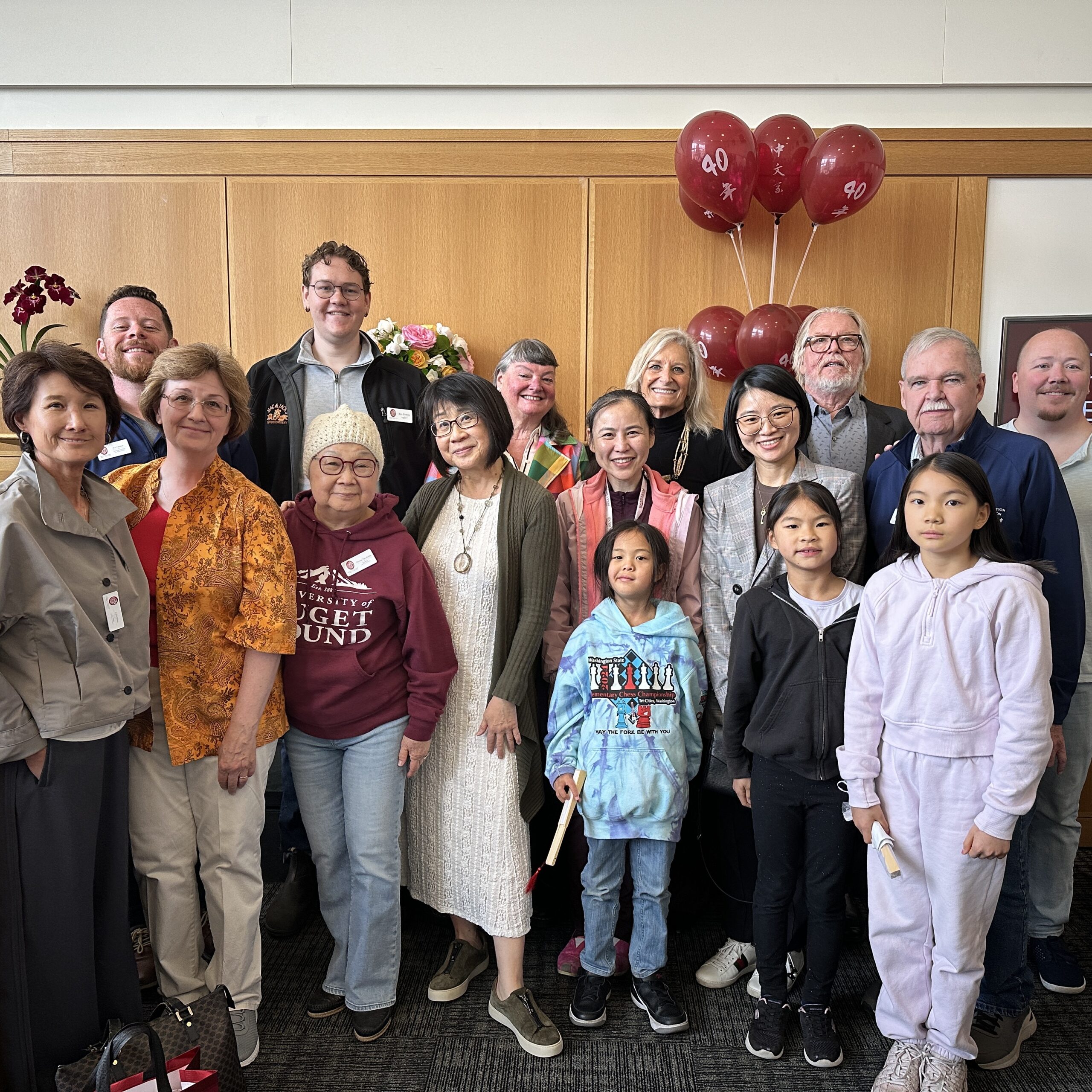
I was overwhelmed by the support and kindness shown at my 40th Anniversary Celebration. Former students—from my first class in 1986 to recent graduates and current students—came together with colleagues from Asian Studies and throughout the University, as well as many board members of the Chinese Reconciliation Project Foundation and friends from the broader community.

Seeing so many people from different chapters of my life in one room was both humbling and deeply meaningful. Thank you all for helping make this celebration so memorable.

My 40th Anniversary Celebration Remarks

[Speech given on June 6, 2026 at the 40th Anniversary of the Chinese Program at Puget Sound, Trimble Forum]

One of the occupational hazards of being a professor is that when you spend your life surrounded by college students, you become very aware of everyone else’s growth while somehow failing to notice the passing of time yourself.

Then suddenly, there is a 40th anniversary celebration for you — and reality sets in.

Seeing everyone gathered here is both humbling and deeply meaningful. While this celebration may be marking my 40 years, it reflects the collective effort of many people who helped build the Chinese Program over the years. What we have accomplished together has always been a shared effort, and I am grateful for the chance to celebrate that with all of you today.

Before I continue, I would like to thank President Crawford for his generous remarks, and Jen Neighbors and the Office of Alumni and Parent Relations for organizing today’s gathering.

Many of you may not know that I come from a family of teachers and scholars. I grew up in Taiwan, in faculty housing at Tunghai University, where my father taught and later retired, and spent many weekends visiting my maternal grandfather at National Chengchi University, where he taught and retired.

I was truly a campus brat. So perhaps what came next was inevitable.

Ironically, when my brother, sister, and I were young, all three of us declared that we would become anything except teachers. To us, teaching seemed like the most predictable and boring profession imaginable.

But somewhere along the way, I discovered that teaching was never only about lesson plans or delivering information. It was about people — their uncertainty, growth, humor, resilience, and potential. The classroom became a place of constant energy and surprise — in other words, the exact opposite of the “boring profession” I once imagined it would be. No two days were ever quite the same, and I soon realized that teaching was itself a continual process of learning.

Well, destiny — or perhaps family conditioning — clearly had other plans. Somehow all three of us siblings became college professors anyway, and I have now been here since 1986.

Coming to this position was itself something of an accident. I had just finished my master’s degree in comparative literature and had decided to delay continuing into a Ph.D. program because I thought I needed some “real life” experience first.

I was not actively looking for a job when someone I had been tutoring mentioned this opening to me. I remember thinking, “Why not?” So I applied — imagining this would simply be a temporary stop before returning to academia “for real.”

As it turned out, this was the only academic position — actually the only job — I ever applied for. At the time, I had very little sense of where saying yes to that one decision might lead.

From the very beginning, I received tremendous support from my colleagues in Foreign Languages and Asian Studies. The work was challenging, demanding at times, but deeply rewarding and incredibly fun.

I eventually came to understand that the “real life experience” I came looking for was here all along.

Looking back, I realize how fortunate I have been to work alongside so many great people who helped shape the Chinese Program over the years.

Being part of the Asian Studies community broadened my perspective and helped me grow as an educator. My colleagues Karl Fields, Zaixin Hong, my fellow instructors, Judy Tyson [who started a successfuly Japanese program 4 years before Chinese], and Mikiko Ludden, shaped my understanding of liberal arts education through their generosity and commitment to its ideals. I especially want to thank Professor Suzanne Barnett for her mentorship and wisdom, and my longtime team teacher, office mate, and life coach, Elizabeth Chen, whose friendship and example continue to inspire me.

Later in my career, a new generation of colleagues: Mengjun Li, Yu Luo, Tina Huynh, and Sam Liao brought fresh ideas and expanded expertise to the Asian Studies Department. Teaching assistants from the Confucius Institute [Yingqi Zheng is here] and those from the Taiwan Fulbright Program energized our work with their enthusiasm and cultural insights. Watching them strengthen and expand the Chinese Program while building on the foundation laid by earlier generations gives me great hope for its future.

Many of these opportunities were made possible by the support and leadership of our department chairs — Karl Fields, Jan Leuchtenberger, Jonathan Stockdale, and now Jen Neighbors — as well as Nick Knotogeorgopoulos, who championed the program first as department chair and later in university leadership. I am also grateful for the support of the Provost Office, and our many administrative offices and campus partners. Your encouragement and shared commitment helped make so much of what we accomplished possible.

In 1989, as soon as I became a full-time faculty member, I organized our first group of students to study at Tunghai University in Taiwan. At the time, I could not have anticipated how much those opportunities and partnerships would grow.

But the motivation behind that first program remained unchanged: I always believed that students should not only study the world, but experience it directly.

And for me personally, sending students to Taiwan carried special meaning as well. Tunghai University was both the campus where I grew up and my alma mater. In many ways, it felt like bringing together different parts of my own journey — my childhood, my education, and my work as a teacher.

Those experiences — traveling, learning across cultures, building relationships, and watching students gain new insights and confidence — became some of the most rewarding parts of my career.

I also spent many years working with professional organizations and community groups here in Tacoma. One of them, the Chinese Reconciliation Project Foundation, has been a major focus of my volunteer work. Through public engagement and community service, I found additional ways to put those same values into practice. I hope that involving students in some of those projects outside the classroom helped demonstrate the importance of giving back and staying engaged in their communities.

Like any long career, there were certainly ups and downs along the way. Whenever I needed to recharge, you could usually find me working in my garden — a place where I found balance and time to reflect.

In many ways, gardening and teaching are not all that different.

Building programs, mentoring students, and nurturing communities across cultures all require patience, persistence, and a trust that growth often takes place unseen, as roots deepen long before anything blossoms.

And both require plenty of TLC, tender loving care.

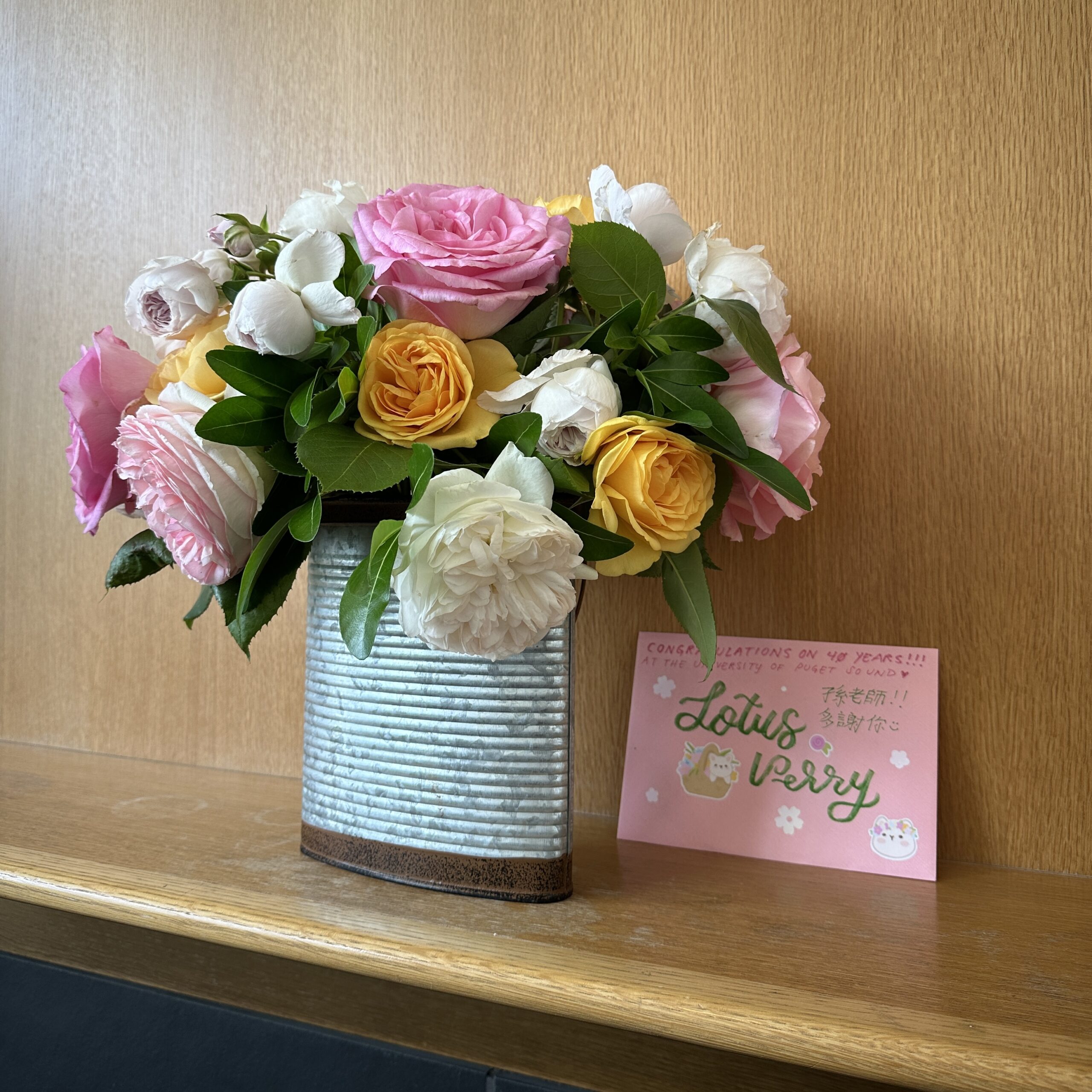
My garden consists mostly of flowering trees and perennials — nothing edible — along with fourteen different varieties of roses. Over the years, I have become especially fond of them. As many gardeners know, roses require a great deal of attention and care. I brought some today to share with you — another result of this labor of love.

I’ve learned that in France, vineyards often plant roses at the ends of vine rows because roses are often the first to reveal signs of stress or trouble. They remind gardeners to notice problems early and respond in time before those problems deepen.

Good teaching, I’ve found, requires much the same instinct.

The students I’ve worked with over the years are not all that different. Some flourish quickly, while others need more time, encouragement, and support. And sometimes, what matters most is simply having someone who sees their potential before they can fully see it themselves.

This is indeed part of the gift of teaching — helping students grow into possibilities they may not yet fully recognize.

One of the greatest rewards of teaching has been watching students — including many in this room today — grow into thoughtful, capable, and compassionate people doing meaningful work throughout the world, much like the satisfaction a gardener feels watching years of care come into full bloom.

Well, forty years may sound like a long time, but in Chinese culture, a full celebratory cycle is actually sixty years, not forty — so I may still have a few more years to go.

Perhaps, in this later chapter of my career, I can take on the challenge of demystifying “Chinamaxxing” on TikTok — and hopefully help younger generations approach Chinese culture with genuine curiosity, nuance, and understanding.

And when I do finally reach the end of my career, I hope I will be able to say:

“I did my best.

I contributed something meaningful.

I cared enough.”

And if that is true, it is only because so many people, like you, shared this journey with me over the years.

40 Years of Teaching: A Bit More History

My Professional Journey and History of the Chinese Program at Puget Sound


1986–1989: Founding the Chinese Program

The Chinese Program at the University of Puget Sound began in 1986 when I was hired as an adjunct instructor to launch Chinese language instruction on campus. At the time, the Asian Studies Program already had an established and popular Japanese language program, founded in 1982 by July Tyson. The Chinese curriculum initially consisted of two sections of Chinese 101–102, but strong student interest quickly led to expansion with the addition of Chinese 201–202 in 1987–88. I was appointed full-time in 1988-89 and became the longtime non-tenure-track faculty member who helped shape and lead the Chinese Program for four decades. From the outset, I envisioned Chinese language study not simply as language acquisition, but as an interdisciplinary and intercultural educational experience integrating language, culture, history, literature, media, and global awareness.

1989–2005: Building the Curriculum Through Collaboration and Innovation

Housed within the Department of Foreign Languages, the Chinese curriculum grew steadily with the support of both language faculty colleagues and the Asian Studies Program. Leadership and collegial support from colleagues including Jacqueline Martin, Esperanza Gurza, Michel Rocchi, and David Tinsley were crucial during the program’s formative years. Equally important were the strong collaborations, guidance, and mentorship provided by Asian Studies colleagues including Suzanne Barnett, Robert Albertson, Bill Colby, Norm Heimgartner, and Karl Fields.

In 1989, I collaborated with the University of Massachusetts Amherst Taiwan summer program to establish study abroad opportunities for Puget Sound students at Tunghai University. Serving as faculty liaison, I coordinated recruitment, advising, orientation, and academic integration of the program into the Chinese curriculum.

During the 1990s and early 2000s, the Chinese Program steadily expanded in enrollment, visibility, and curricular offerings. I developed advanced thematic courses including:

  • Across the Strait: Cultures of China and Taiwan,
  • Greater China: Commerce and the Media,
  • From Bamboo Grove to Cyberspace: Chinese Literary Texts Now and Then.

At the same time, the program cultivated a vibrant co-curricular environment through the Foreign Language House Program. Partnerships with local Chinese and Taiwanese communities, along with film series, cultural events, and field trips, further enriched students’ cultural learning and community engagement beyond the classroom.

I also became quite involved in instructional technology, developing multimedia course websites, online learning tools, digitized audio and video materials, and interactive assignments before such methods became common in language teaching. My main course website, launched in 2000 and still in use today, along with the later Chinese4Ucourse blog, supported both classroom and independent learning while helping students build language proficiency, cultural knowledge, and digital literacy. I had opportunities later to share my passion in technology-enhanced pedagogy with others at national conference presentations and publications.

During this period, I collaborated with Prof. Shou-hsin Teng on the textbook Taiwan Today: An Intermediate Course, which was adopted nationally and internationally by numerous institutions.

2005–2009: Program Expansion and Statewide Leadership

As enrollments continued to grow, the Chinese Program expanded staffing and curriculum. Elizabeth Chen joined the program and collaborated closely with me in team-teaching, curriculum redesign, oral communication labs, and development of new upper-division courses.

New courses added during this period included:

  • Chinese 230: Grammar and Articulation,
  • Chinese 250: Culture and Communication,
  • Chinese 260: Advanced Oral Expressions.

In 2007, Chinese 201–202 at Puget Sound was recognized by the College Board as one of the nation’s AP Chinese Best Practices programs.

An important milestone came in 2008 with the realignment of the Asian language programs from the Department of Foreign Languages into the Asian Studies Program. The transition reflected the increasingly interdisciplinary nature of Chinese and Japanese studies and created new opportunities for curricular growth and collaboration within Asian Studies.

The realignment also led to the development of a new Chinese Language and Culture major, replacing the earlier Foreign Languages and International Affairs (FLIA) major with a Chinese concentration. In 2010, the program graduated its first Chinese Language and Culture major.

I also became involved in Chinese language education across Washington State. In 2005, I helped establish the Chinese Language Teachers Network (CLTN), working with colleagues including Greg Youtz and Adam Ross to create statewide professional networking and teacher development opportunities for Chinese language educators.

In 2006, I joined the Chinese Language Core Team of Washington State and helped develop initiatives supporting schools interested in starting Chinese programs. CLTN later evolved into the Chinese Language Teachers Association-Washington (CLTA-WA), formally established in 2009 through planning led by me and colleagues.

During this same period, I became increasingly involved with the College Board AP Chinese Language and Culture Examination. Beginning as an AP Reader, I later served as a Scoring Leader, Question Leader, and consultant working directly with chief readers, Educational Testing Service (ETS), and experienced Chinese language educators from across the United States. My work included AP scoring leadership, development of testing materials, participation in ETS Summer Writers Workshops, and collaboration on curriculum and assessment standards for AP Chinese.

At the same time, I continued presenting nationally on Chinese pedagogy, instructional technology, AP Chinese standards, and teacher training through American Council on the Teaching of Foreign Languages (ACTFL), CLTA, the Chinese Innovation Forum, and statewide workshops and conferences.

2006–Present: Taiwan Programs and International Partnerships

A major milestone came when my proposal to establish a direct institutional affiliation between University of Puget Sound and Tunghai University became a reality. The UPS/Tunghai Summer Program launched in 2006 and continues today as one of the university’s signature international opportunities for intensive language and cultural immersion in Taiwan.

International partnerships expanded further in 2023 through Memoranda of Understanding (MOUs) signed with Wenzao Ursuline University of Languages and in 2024 with National Dong Hwa University. The Wenzao exchange now brings students from Taiwan to Puget Sound each fall while sending Puget Sound students to Taiwan each spring.

In January 2024, I led the 2023–24 Intercultural Engagement Program in Taiwan, a faculty development initiative involving ten selected faculty members from a wide range of disciplines across the university. The program introduced participants to Taiwan’s higher education system, society, history, and culture while fostering new academic and institutional connections. Many participating faculty members later developed ongoing collaborations and Taiwan-related initiatives in their own teaching and professional work.

2010s: Community Engagement, Experiential Learning, and Program Growth

Throughout the 2010s, the Chinese Program evolved into a broader center for intercultural engagement, public humanities, and Asian American community-building.

In 2015, the continued success and steady growth of the Chinese Program led to the establishment of a tenure-track position in Chinese. Mengjun Li joined the program that year, strengthening instructional continuity, student mentoring, and support for the expanding curriculum.

I also developed experiential learning opportunities that connected classroom learning with community engagement and public humanities work. In 2016, I spearheaded a large-scale experiential project involving more than 40 Puget Sound students volunteering at the Tacoma Moon Festival while learning about Tacoma’s Chinese American history and reconciliation efforts. Students and interns also became actively involved in the Chinese Reconciliation Project Foundation’s annual Walk for Reconciliation Against Racism, helping organize events, participate in community outreach, and volunteer in activities promoting racial justice and intercultural understanding. These community-based initiatives became a defining strength of the Chinese Program and fostered strong collaborations with local schools, community organizations, and Chinese and Taiwanese communities throughout the region.

Over time, the program also developed a number of popular student-centered co-curricular activities, including the Chinese Cultural Engagement Community (CCEC), Mahjong Club, and Tea Club, which helped build community, encourage intercultural exchange, and sustain student engagement beyond the classroom.

Throughout this period, I continued my long-standing service with the Chinese Reconciliation Project Foundation (CRPF), serving as the Secretary on the Board of Directors, supervisng the admin team, organizing cultural events, maintaining public outreach efforts, and helping support Tacoma’s reconciliation work related to the 1885 Chinese expulsion.

I also worked closely with:

  • the Tacoma Taichung Sister City Committee,
  • the Tacoma Fuzhou Sister City Committee,
  • the Taipei Economic and Cultural Office (TECO),
  • the Confucius Institute of the State of Washington (CIWA).

2020–Present: Inclusive Teaching, AAPI Advocacy, and Community Building

The most recent phase of my professional journey reflected my continued adaptation to changing student needs, post-pandemic teaching realities, and the growing importance of mentorship, inclusion, and community engagement. In my 2023 evaluation statement, I described my work as centered on “building a supportive community and giving space to each student to grow and reach their potential.” It remains one of the core values that has shaped both my teaching and my sense of purpose as an educator.

During this period, I expanded outreach programming for Asian Studies and collaborated closely with AAPI students on campus-wide events and mentoring initiatives. I helped establish a recurring Empowering Asian Americansforum (wee, at least for two years) in partnership with the Chinese Reconciliation Project Foundation and community leaders, creating space for dialogue on Asian American identity, anti-Asian racism, leadership, and civic engagement.

I also strengthened the program’s Taiwan initiatives through collaboration with the Taipei Economic and Cultural Office (TECO), implementation of the Test of Chinese as a Foreign Language (TOCFL) at Puget Sound, and continued development of Taiwan-focused programming such as Taiwan Week. In the post-COVID years, the program also began collaborating with the Foreign Language Teaching Assistant (FLTA) Program, through which Puget Sound welcomed its first FLTA from Taiwan in 2021–22 and has continued hosting Taiwanese FLTAs through the present.

My commitment to experiential learning also led to paid student internships with the Chinese Reconciliation Project Foundation, further connecting students with public humanities, Asian American history, and community engagement work.

At the same time, I continued mentoring students for nationally competitive scholarships and fellowships, helping support applications for Fulbright, Critical Language Scholarship, Freeman, Boren, and other international study opportunities.

This period also brought important recognition of my impact as a teacher and mentor. I was selected as the 2022 Academic Convocation faculty speaker and received the ASUPS Outstanding Faculty Award, recognizing my long-standing commitment to student-centered teaching, mentorship, and community-building. Here is my Convocation Speech, The Power of Savoring: What the Tortoise Knows.

Legacy, International Engagement, and Continuing Vision

Over four decades, I managed to help transform Chinese language study at Puget Sound from a small introductory offering into a nationally recognized, globally connected, and community-engaged program.

Among the accomplishments I values most are mentoring generations of students in language study, study abroad, scholarships, fellowships, and professional growth, while connecting language education with community engagement, public humanities, and cross-cultural understanding.

In recent years, my work has increasingly focused on internationalizing the campus not only by sending students abroad, but also by “bringing Asia to campus” through exchange partnerships, faculty initiatives, cultural programming, and experiential learning opportunities involving international students, Fulbright scholars, teaching assistants, and community partners. This vision helped inspire new partnerships and exchanges, including the successful launch of the 2025 Summer Academy initiative, which hosted students and teachers from China’s Qingdao Baishan School for an 11-day immersive experiential learning workshop and camp at Puget Sound.

The history and development of the Chinese Program at Puget Sound are closely intertwined with my own professional journey as an educator, mentor, and community leader. I hope my continuing efforts will inspire others to commit themselves to global learning and intercultural understanding, while also helping strengthen connections within their own communities and with the wider world.
From Taiwan Night to Taiwan Week

[Now planning for 2027 Taiwan Week in the month of October … any suggestions?]

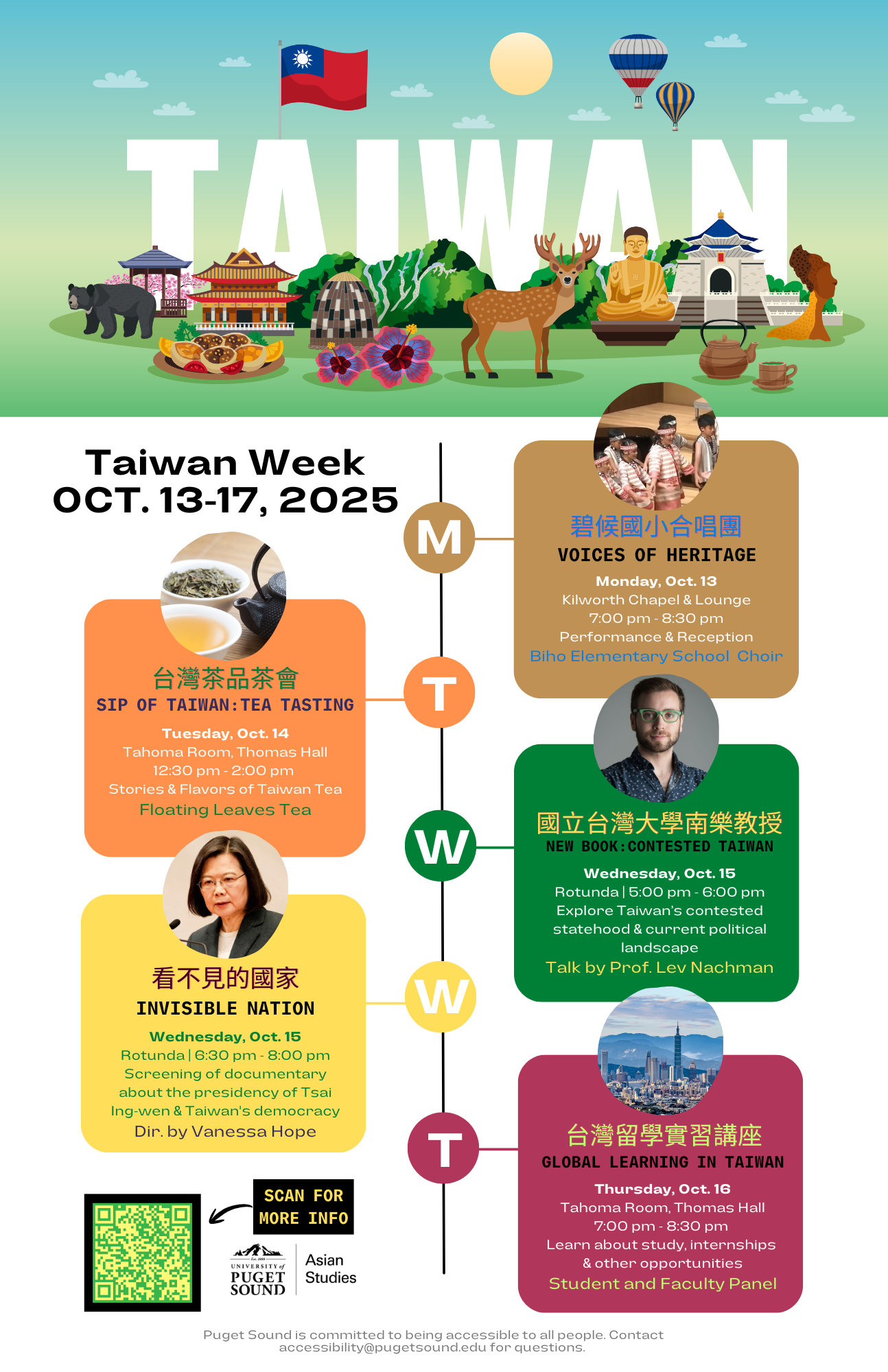
TAIWAN WEEK (Oct 13 – 16, 2025) @ University of Puget Sound


Monday, Oct. 13 | 7:00 pm – 8:30 pm
Kilworth Chapel & Lounge

VOICES OF HERITAGE | 台灣南澳碧候國小合唱團
Performance & Reception
Indigenous Children’s Choir, 15 members, Boho Elementary School, Nan’ao, Taiwan
Introduction by Dr. Huiyu Lin, Teaching Associate & Field Supervisor | University of Washington Tacoma, School of Education, and University of Washington, Taiwan Studies

Prof. Lin will give a short introduction on Indigenous language reclamation and revitalization (ILR²) and its connections to Indigenous cultures, knowledge, and daily life. This will help the audience better appreciate the traditions and stories behind the music as they enjoy the performance. The program will feature seven traditional songs in the Atayal language, reflecting the rich cultural heritage of the Atayal people. Following the performance, there will be a reception and poster session, where students from the first-year Chinese class will present their projects and have the opportunity to interact with the visiting choir members.

Tuesday, Oct. 14 | 12:30 pm – 2:00 pm Tahoma Room, Thomas Hall

SIP OF TAIWAN: TEA TASTING | 台灣茶品茶會
Stories & Flavors of Taiwan Tea
Presented by Floating Leaves Tea in Seattle

Join us for a hands-on exploration of Taiwan tea with Shiuwen and Noah from Floating Leaves Tea in Seattle. The session will include three parts: an introduction to Taiwan tea and its unique qualities, along with the presenters’ experiences as small tea merchants in the U.S.; a tea tasting overview with guidance on how to taste and appreciate tea, followed by a Q&A; and a guided tasting of selected teas. Participants will have the opportunity to savor flavors, learn brewing techniques, and discover the stories behind each tea.

Wednesday, Oct. 15 | 5:00 pm – 6:00 pm
Rotunda, Wheelock Student Center

CONTESTED TAIWAN | 國立台灣大學南樂教授
Explore Taiwan’s contested statehood & current political landscape
Talk by Dr. Lev Nachman, Assistant Professor in the Graduate Institute of National Development at National Taiwan University and coauthor, with Jonathan Sullivan, of Taiwan: A Contested Democracy under Threat.

Join us for a book talk with Lev Nachman on Contested Taiwan, which examines how questions of identity and territory shape Taiwan’s political landscape. Despite maintaining de facto sovereignty, Taiwan remains largely unrecognized internationally, a status that deeply affects its domestic politics. Drawing on 150 interviews with activists and politicians, as well as a comparative analysis of Ukraine, Nachman shows how existential threats and strained relationships with established parties push social movements into formal politics. The book offers a fresh perspective on contested statehood, movement party formation, and what motivates individuals to take political action worldwide.

Thursday, Oct. 16 | 7:00 pm – 8:30 pm
Tahoma Room, Thomas Hall

Wednesday, Oct. 15 | 6:30 pm – 8:00 pm
Rotunda, Wheelock Student Center

INVISIBLE NATION | 看不見的國家
Screening of documentary about the presidency of Tsai Ing-wen & Taiwan’s democracy
Dir. Vanessa Hope • 2023 • 85 min

Invisible Nation is an intimate documentary that follows Taiwan’s first female president, Tsai Ing-wen, as she navigates the challenges of defending her nation’s democracy and identity amid intensifying pressure from China and global geopolitics. With rare access to Tsai and her administration, the film highlights Taiwan’s transformation into a vibrant democracy while facing diplomatic isolation and external threats. It is both a tribute to the resilience of the Taiwanese people and a powerful reminder that democracy, once won, must continually be protected.
GLOBAL LEARNING IN TAIWAN | 台灣留學實習講座
Learn about study, internships & other opportunities in Taiwan

Discover the many opportunities Taiwan offers for global learning—from semester and summer study abroad to internships, language programs, and cultural exchange. This session will provide practical information on available programs, application processes, and student experiences. Join us to learn how Taiwan can be a dynamic destination for your academic and professional growth.
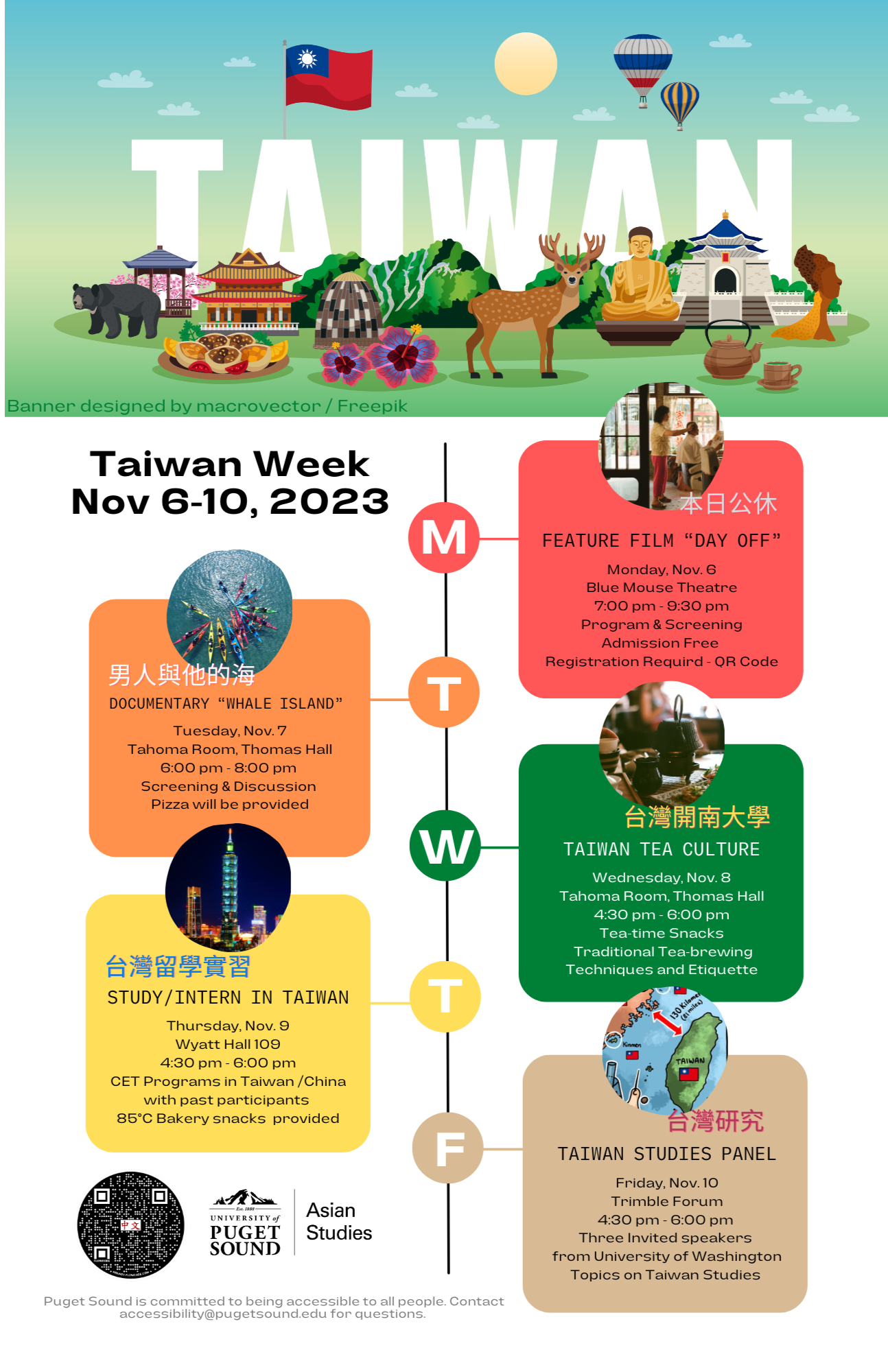
TAIWAN WEEK (Nov. 6 – 10, 2023) @ University of Puget Sound

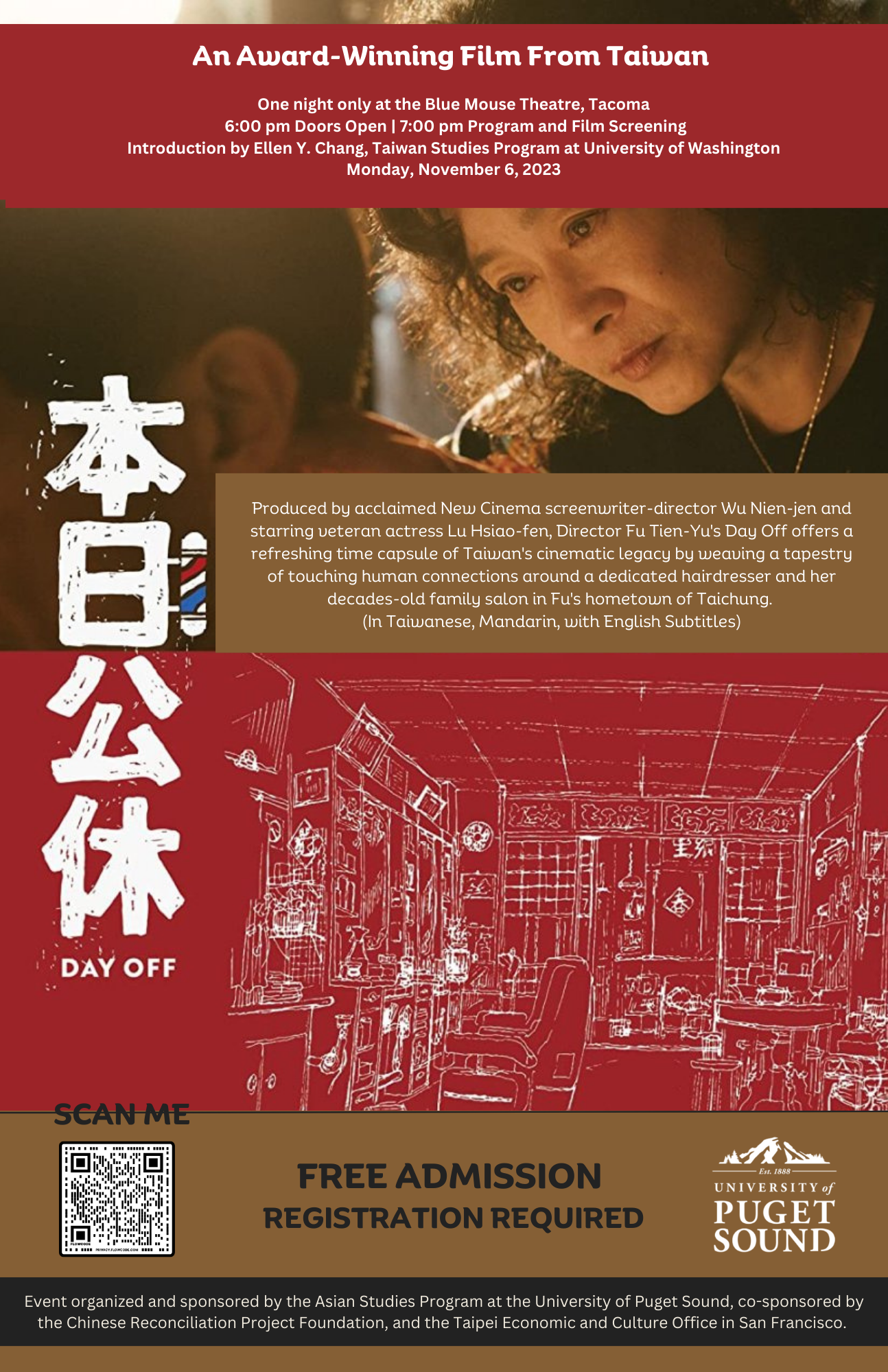
Taiwan Week Feature Film: Day Off (Taiwan, 2023)
Nov 06, 2023
7 p.m. – 9:30 p.m.


An Award-Winning Film From Taiwan showing one night only at the Blue Mouse Theatre. Introduction by Ellen Y. Chang, Taiwan Studies Program at University of Washington. Produced by acclaimed New Cinema screenwriter-director Wu Nien-jen and starring veteran actress Lu Hsiao-fen, Director Fu Tien-Yu’s Day Off offers a refreshing time capsule of Taiwan’s cinematic legacy by weaving a tapestry of touching human connections around a dedicated hairdresser and her decades-old family salon in Fu’s hometown of Taichung. (In Taiwanese, Mandarin, with English Subtitles).

Day off 本日公休

  • 6 p.m. Doors and Concession Stand Open
  • 7 p.m. Program and Film Screening


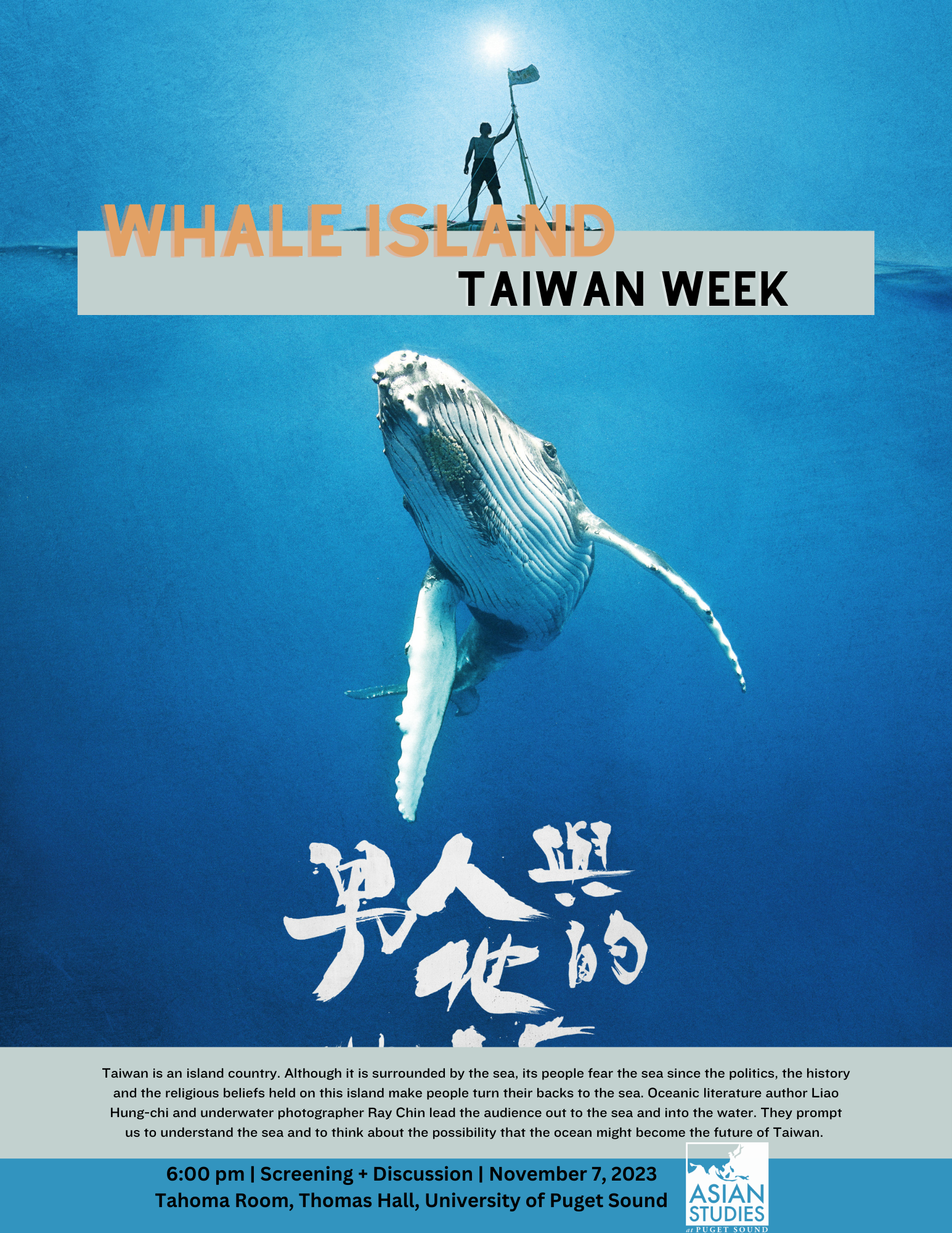
Taiwan Week Documentary Film: Whale Island (Taiwan, 2020)
Nov 07, 2023
6 p.m. – 8 p.m.

Taiwan is an island country. Although it is surrounded by the sea, its people fear the sea since the politics, the history and the religious beliefs held on this island make people turn their backs to the sea. Oceanic literature author Liao Hung-chi and underwater photographer Ray Chin lead the audience out to the sea and into the water. They prompt us to understand the sea and to think about the possibility that the ocean might become our lives and the future of our country.

Director: HUANG Chia-chun | Year: 2020 | Running Time: 108 min

Film Screening
Discussion led by Asian Studies faculty
Pizza will be provided


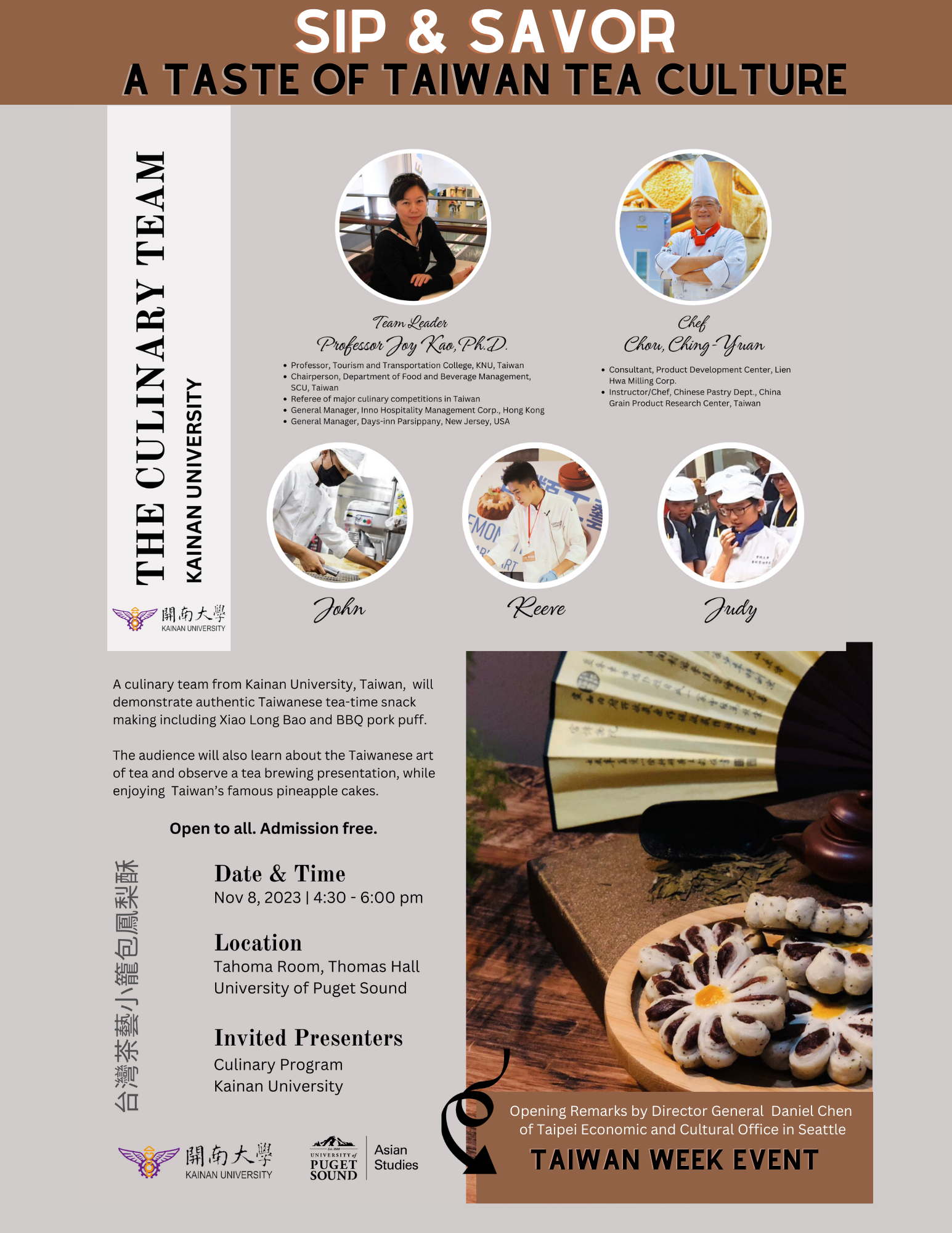
Taiwan Week: Sip & Savor, A Taste of Taiwan Tea Culture
Nov 08, 2023
4:30 p.m. – 6 p.m.


A culinary team from Kainan University, Taiwan, will demonstrate authentic Taiwanese tea-time snack making including Xiao Long Bao and BBQ pork puff.

The audience will also learn about the Taiwanese art of tea and observe a tea brewing presentation, while enjoying Taiwan’s famous pineapple cakes.

  • 4:30 p.m. Opening Remarks by Daniel Kuo-ching ChenDirector General of Taipei Economic and Cultural Office in Seattle
  • 4:45 p.m. Demonstration of Tea-time Snack Making
            Art of Tea Brewing Presentation
  • 5:30 p.m. Tasting, Mingling and Q&A 

Kainan culinary team is led by Prof. Joy KAO and faculty Chef CHOU Ching-Yuan, and includes student chefs John, Reeve and interpreter Judy. 

Kainan University (KNU) is located in Taoyuan City, Taiwan. Founded in 1917 as the Island’s finest commercial and technical high school, Kainan later transformed into a management college, and then in 2004, became a private university. KNU academics include School of Business, School of Transportation & Tourism, School of Informatics, School of Humanities & Social Sciences, School of Health Care and others. Our guest presenters come from the Department of Tourism and Hospitality Management, a popular program that has trained many successful leaders in Taiwan’s dynamic tourism industry. 

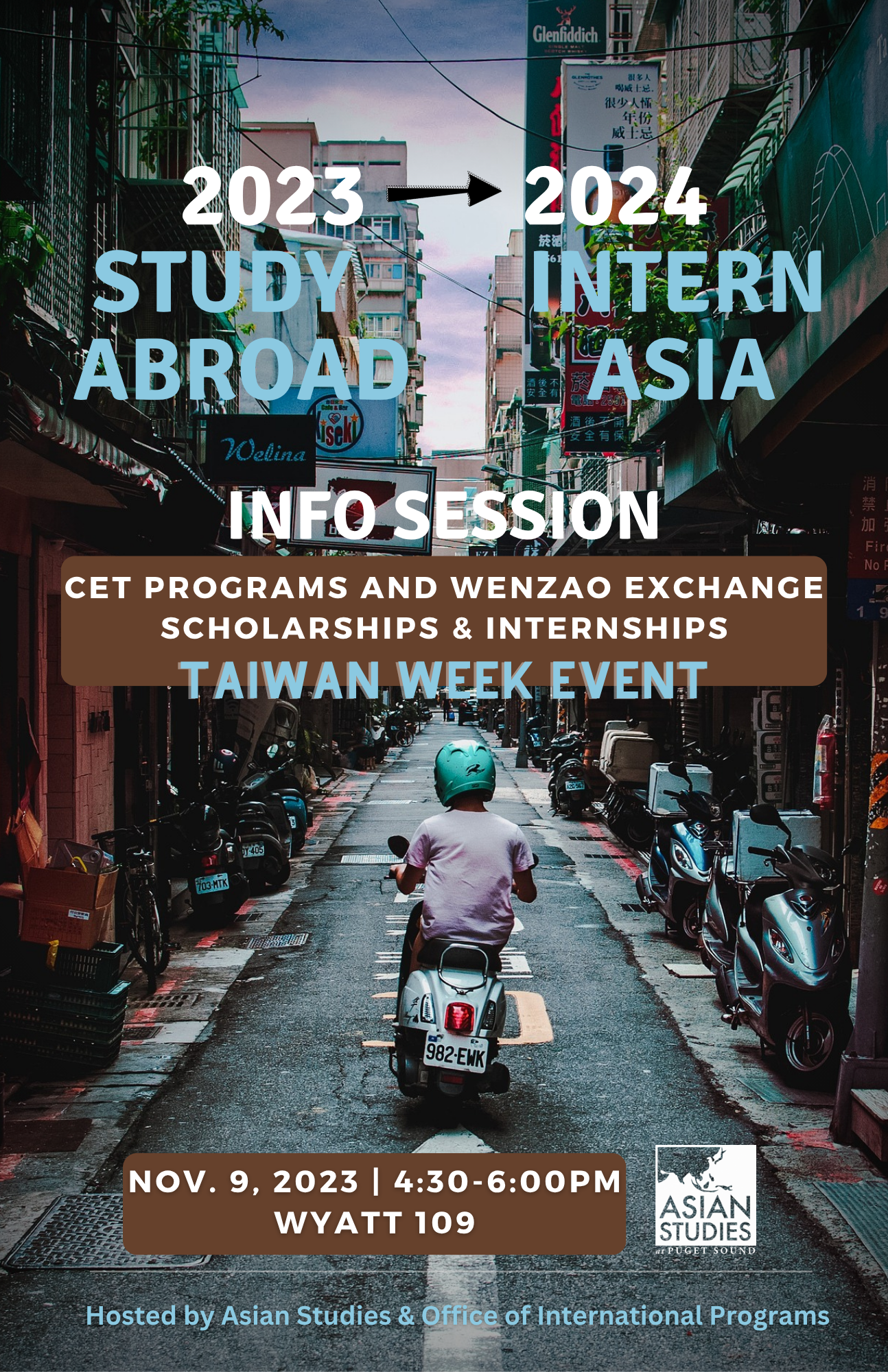
Taiwan Week: Study Abroad for Mandarin Language Learners

Nov 09, 2023
4:30 p.m. – 6 p.m.


Info Session: study abroad programs, internship opportunities, need-based and merit-based scholarships, application requirements and deadlines. CET Programs in China and Taiwan, & Wenzao Ursuline University of Languages Taiwan Exchange Program.

  • 4:30 p.m. Program Overview
    Roy Robinson, Director of International Programs
  • 5:00 p.m. Past & Current Participants Sharing Experiences
    Allie Chapman, CET Spring 2023
    Ben Everett, CET Summer 2023
    Wendy Huang, Wenzao Exchange Student, 2023-24
  • 5:30 Q&A
    Prof. Lotus Perry, Chinese Language and Culture


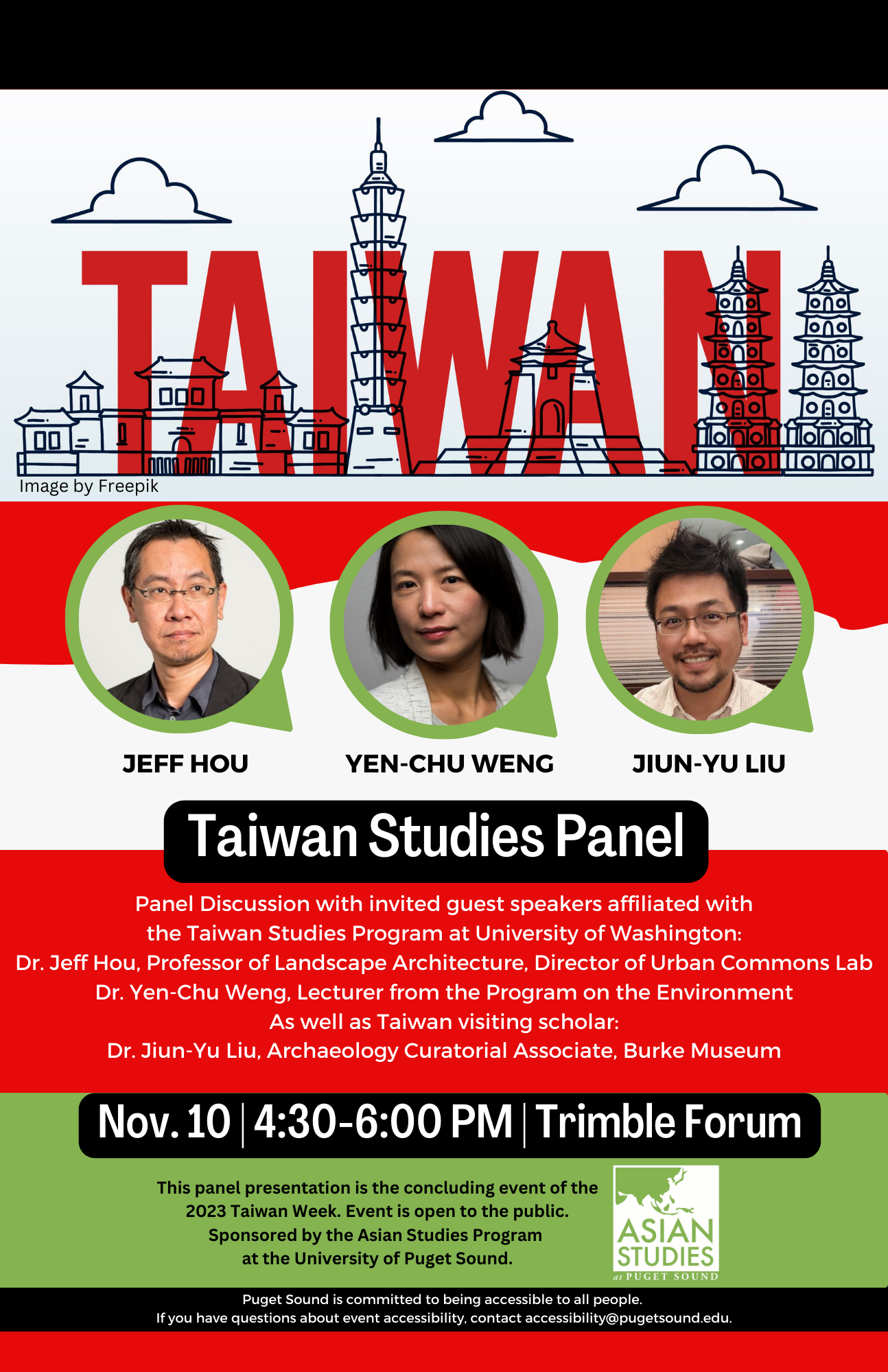
Taiwan Week Taiwan Studies Panel
Nov 10, 2023
4:30 p.m. – 6 p.m.

5:30 p.m. — Q&A

Each of the three panelists is asked to speak for 20 minutes from their area of expertise regarding some issue (or constellation of issues) regarding Taiwan, followed by 20 minutes of discussion and Q&A with the audience.  

Two invited guest speakers affiliated with the Taiwan Studies Program at University of Washington:

  • Dr. Jeff Hou, Professor of Landscape Architecture, Director of Urban Commons Lab
  • Dr. Yen-Chu Weng, Lecturer from the Program on the Environment

As well as Taiwan visiting scholar at University of Washington:

  • Dr. Jiun-Yu Liu, Archaeology Curatorial Associate, Burke Museum

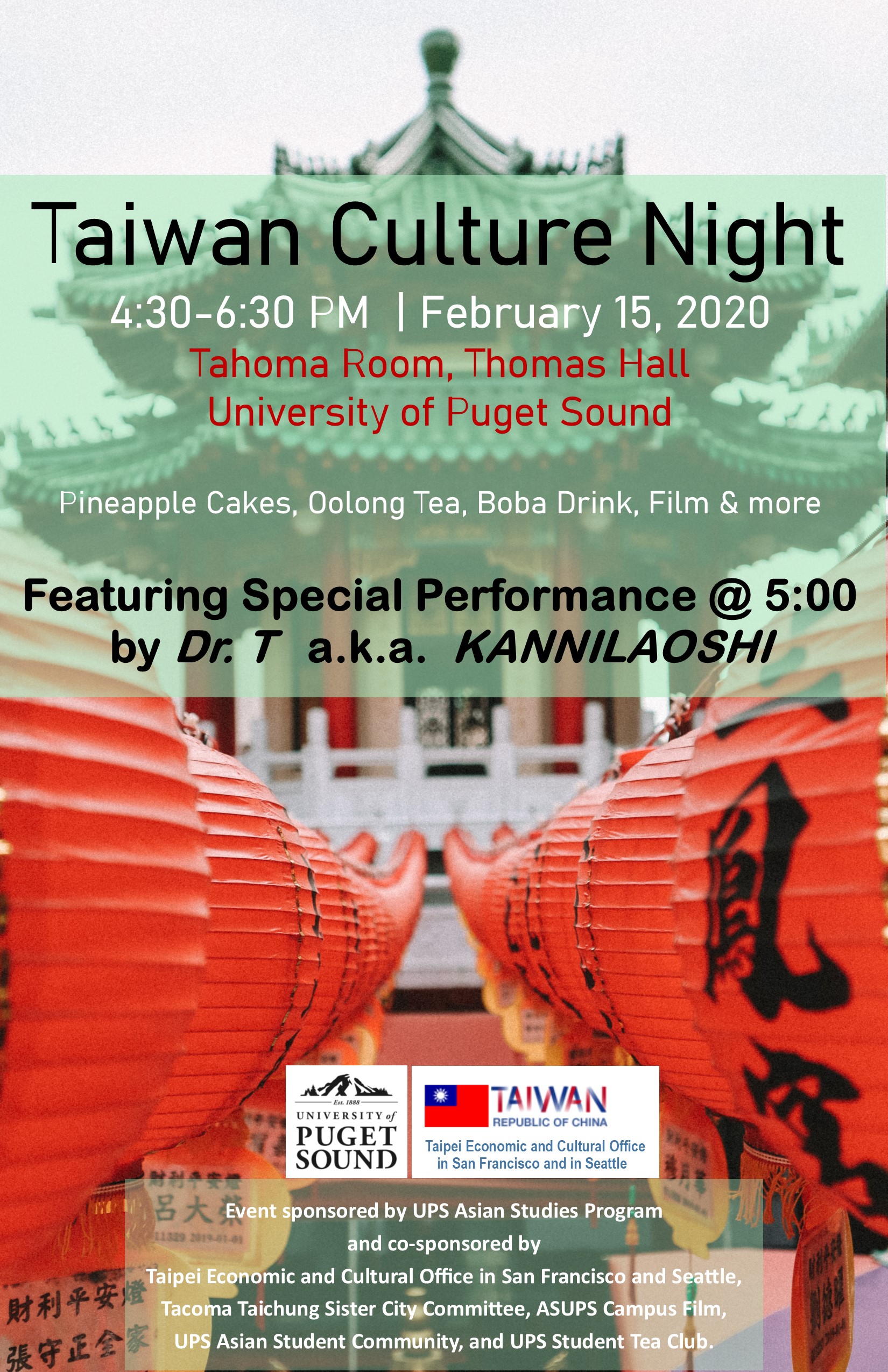
Taiwan Culture Night
Feb. 15, 2020

4:30-6:30 PM


MAKING SPACE (This is a re-post; original post on https://www.pugetsound.edu/stories/making-space)
by Anneli Haralson
Photos by Sy Bean

Puget Sound’s first Taiwan Culture Night brings Chinese community together
Aimee Roseberry ’21 stepped off the plane in Taiwan and panicked. As a double major in sociology and anthropology and Chinese, she had two years of Chinese language classes behind her, but was still overwhelmed by the sudden immersion into the language. “I just remember thinking, “Oh my God, I don’t know Chinese,” she recalls. “It felt like I was totally lost.”

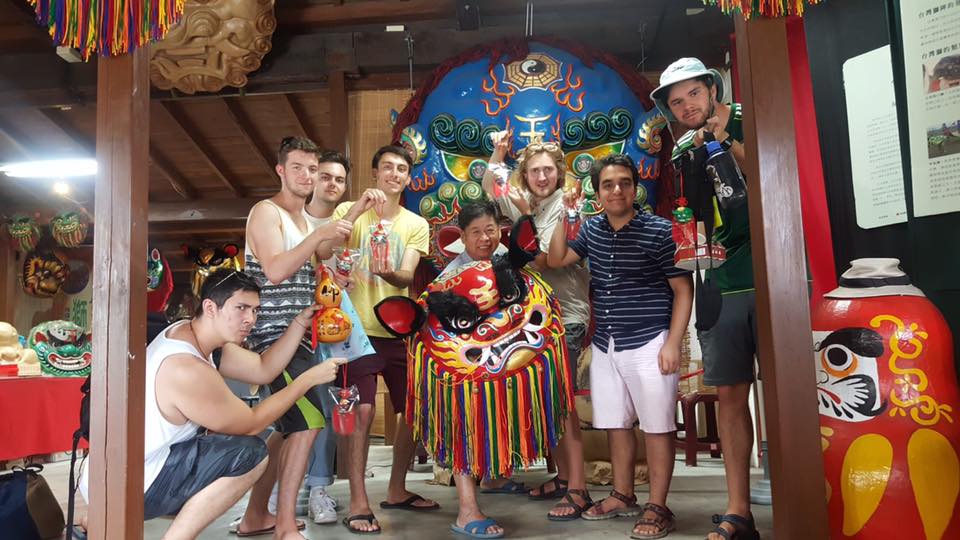
It was June, and she was heading to Tunghai University for Puget Sound’s Taiwan Summer Program—an eight-week language-intensive study abroad experience. From the next two months, Aimee and her four Puget Sound classmates would be immersed in Chinese language and culture. They would speak and hear only Chinese in the classroom, room with native Taiwanese students, and experience the culture firsthand.

“It became way easier with the immersion,” Roseberry says. “It was intimidating, but I loved it.”
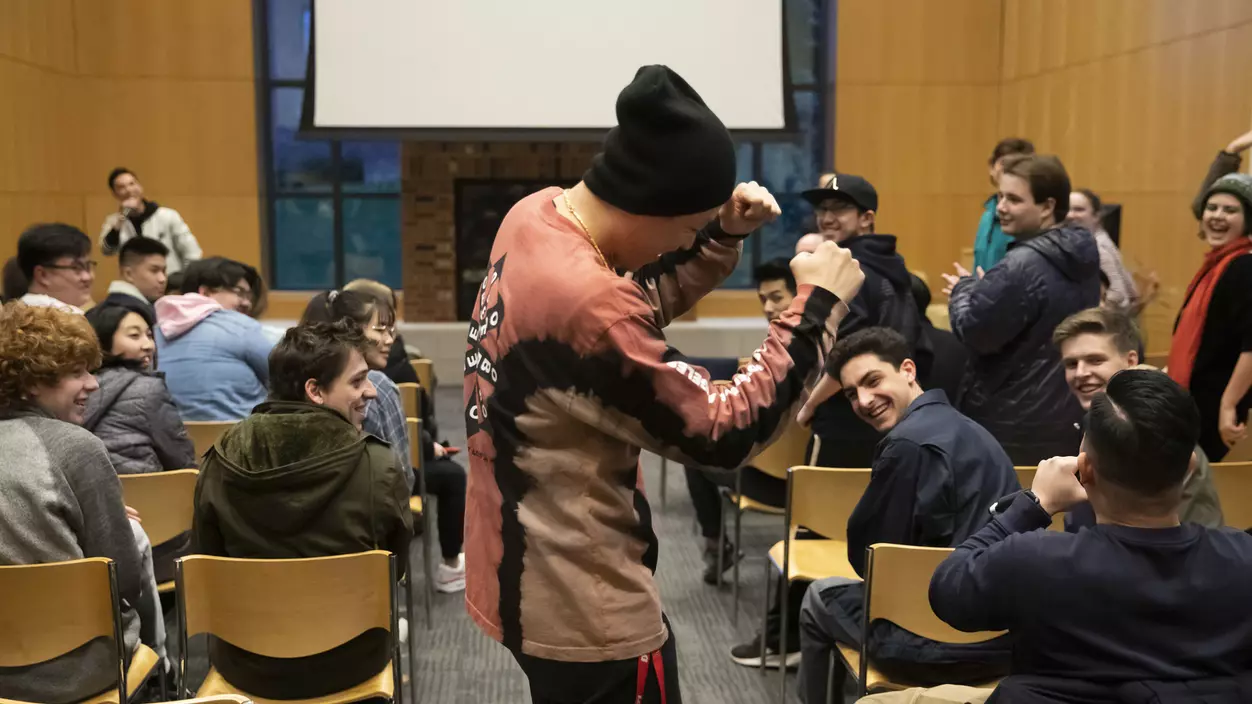
Back in Washington and in the classrooms of Puget Sound’s Asian Studies Program, Aimee is continued her studies. But her instructor, Lo Sun “Lotus” Perry, who started the university’s Chinese language program and oversees the Taiwan Summer Program, believes that learning in a classroom is not enough. “The hope is for my students to be able to interact,” she says. So this year she organized Puget Sound’s first-ever Taiwan Culture Night, held on Feb. 15. Her goal was to give students like Aimee a space to connect with other summer program alumni, students interested in Taiwanese culture, and members of the local Chinese community. The event featured a performance by Taiwanese rapper Dr. T, traditional Taiwanese food (including boba and rice balls), and a movie screening.

“We have had students studying abroad through the Taiwan program every summer since 1989,” Perry says. “We’re trying to get our students from the program together in one room and give them a venue to talk about their experiences and those interested in that. It’s really an opportunity to create that space for people to get to know each other a little better.”

It was also an opportunity to be reminded of Tacoma’s history and its expulsion of Chinese immigrants in 1885. On a November morning that year, an angry mob forced hundreds of the city’s Chinese citizens onto a train bound for Portland, Ore. Their homes and businesses were burned days later. The expulsion came to be known as the Tacoma Method and its effects were far-reaching. Chinese residents did not settle in Tacoma again until the 1940s and the city still does not have a Chinatown district.

“Because of that, it’s kind of hard to become immersed in the culture,” Perry says. “One of the goals was to bring in members of the Chinese community and say, ‘Hey, look. There are people here who speak Chinese.’”

More than 140 people from the university and greater Seattle-Tacoma area attended Taiwan Culture Night, and Perry says she would like to make the it an annual event. “It’s all about creating a fun, cocurricular activity connected to what students are learning in the classroom,” Perry says. “Through food, crafts, and music, I hope students think a little bit deeper and pursue something that interests them.”

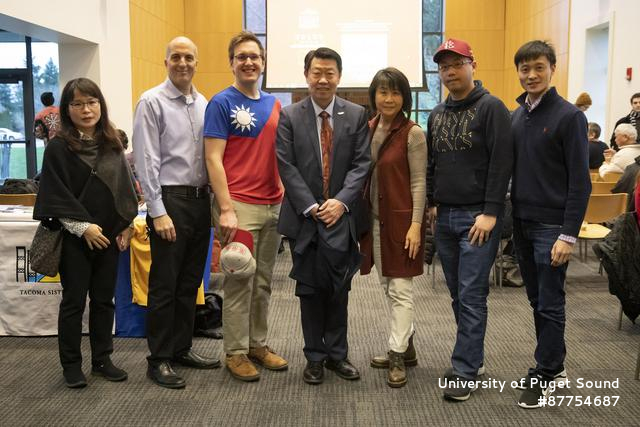
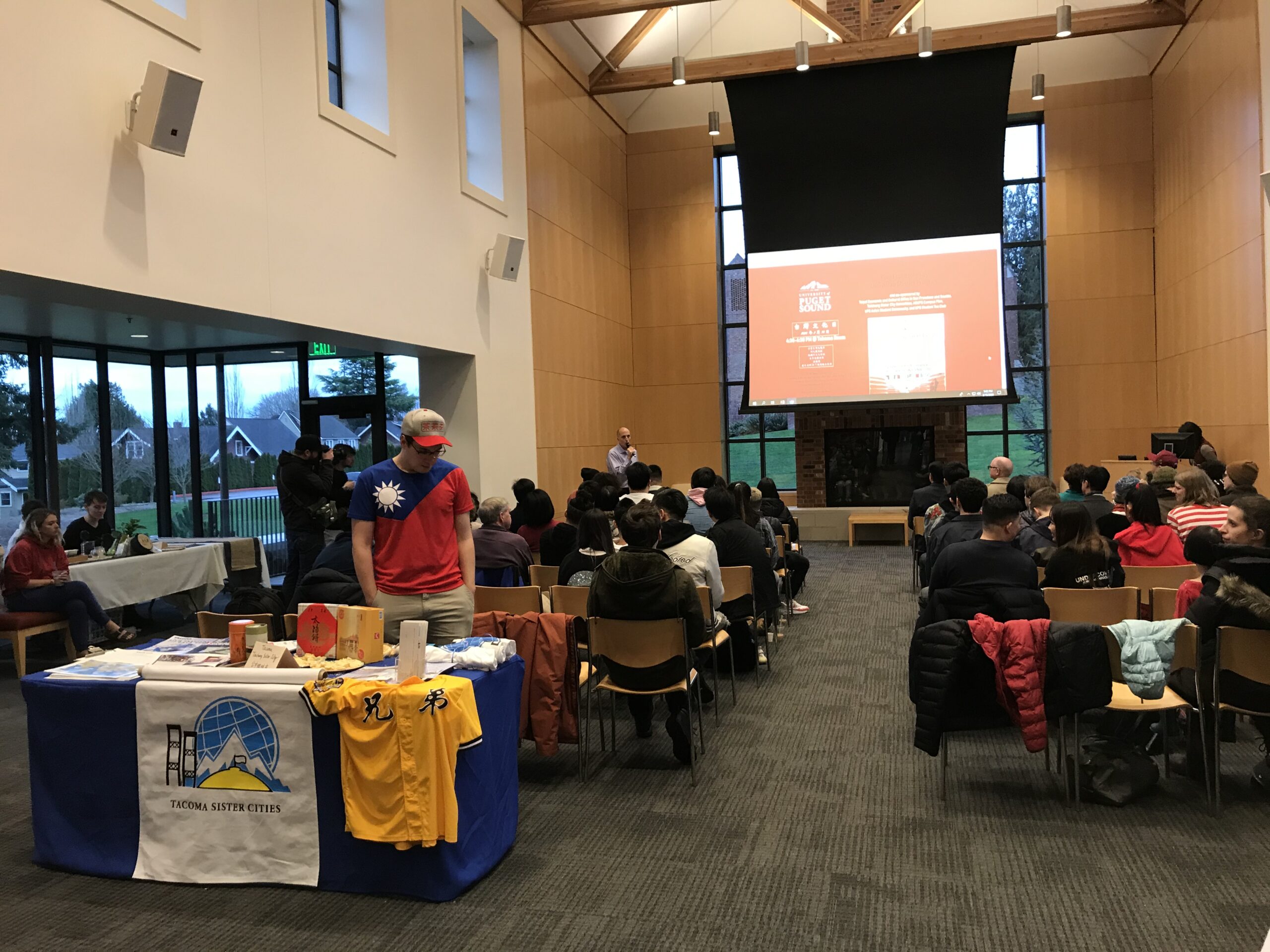
Community members, faculty, students, and staff gather in the Tahoma Room for the Taiwan Culture Night with guest performance by Dr. T, aka Kannilaoshi, Saturday, Feb. 15, 2020.

The Power of Savoring: What the Tortoise Knows

Faculty Speech given by Lotus Perry at the University of Puget Sound Academic Convocation on Commencement Weekend in May 2022

I am honored to be nominated by students and asked by the Provost to speak at this momentous event, as we celebrate our best and brightest. It was three years ago, when I last attended a graduation convocation, at another university as a parent, to celebrate my daughter and her fellow classmates’ achievements. I recall the text message that I sent to my daughter just before the event: a single “tortoise” emoji, which is our family inside code to say “savor the moment.” As we gather here today, as parents and families, faculty and staff, advisors and friends, classmates and peers, to recognize our outstanding students this year, listening to citations of their feats and triumphs, with deep admiration and great pride, I am sharing the same message that I shared with my daughter, yes, the tortoise emoji.

Well, allow me to explain.

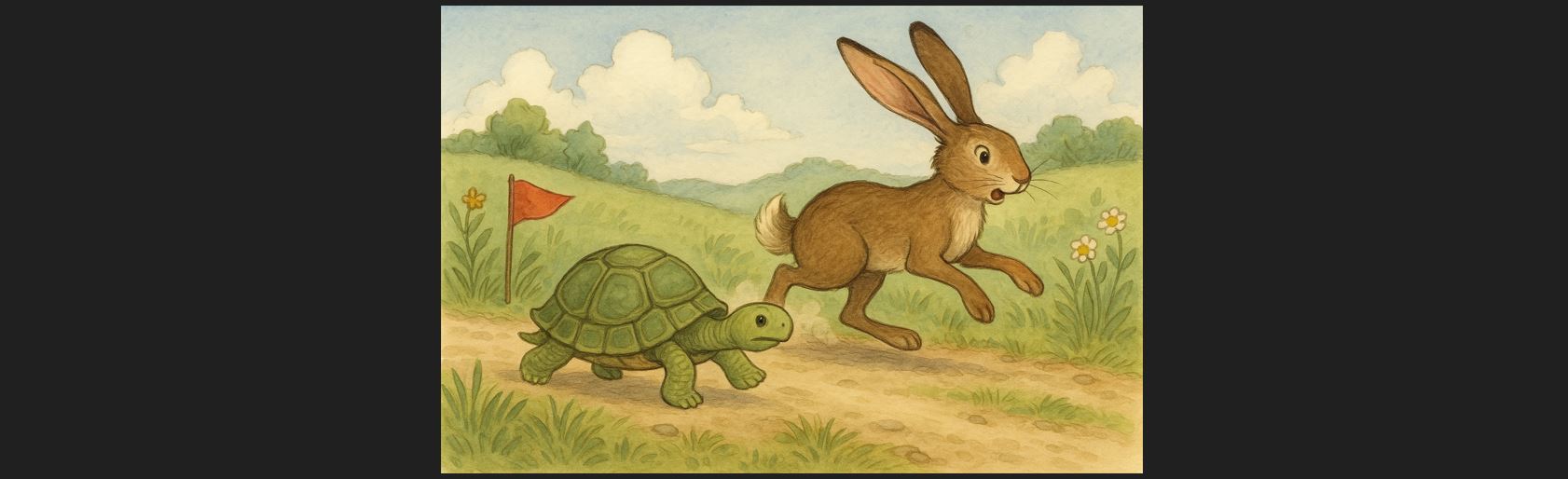
We all know the story of the Tortoise and the Hare and that ultimately “slow and steady” won the race. The moral of Aesop’s fable is to keep moving toward your goals, no matter how slow or difficult. Focus on the journey, and pace yourself. In my reading of this story with my daughter when she was young, we always imagined the tortoise as a happy and content soul that stops to smell the roses at every garden, while the hare was racing with rage and seemed to have missed everything along the way. While I was enjoying a teaching moment with my 5-yearold, I did not realize until much later that I was actually reinforcing an important concept of “savoring” in Positive Psychology that aims to help us build a more
balanced and happier life.

What does the term “savoring” mean in psychology? Fred Bryant and Joseph Veroff in their 2007 publication define savoring as “attending, appreciating, and enhancing” positive experiences that occur in one’s life. In this context, savoring is not only an attitude, a mindset, or means to enjoy the journey, but also a practiced skill and a strategy to enhance one’s well-being. In 2018, when Laurie Santos, a Psychology Professor at Yale offered a new 100-level course called Psychology and the Good Life, with the goal to teach students how to lead a happier, more satisfying life, about 1,200 students, or nearly one-fourth of Yale undergraduates enrolled. This record-setting interest among students in such a course should not come as a surprise to college campuses as we are all very familiar with how intense and stressful work life can be for all of us.

As we gather today to celebrate the achievements of our students, I’d like to point out, as Prof. Santos would most likely highlight to students in her class, prestige scholarships, or memberships to honor society, all achievements deserving recognition, but do not necessarily equate to happiness or the Good Life. However, it is the positive experiences, like the celebration we’re now having and other graduation events we will go through this weekend, which are crucial moments in life that will help us better anchor and solidify our personal well-being. The happiness of today’s celebration lies not in the tangible award that one receives, but in the reflection of the work one has done, the challenges one has faced and overcome, and the support gathered along the way, as well as the gratitude such
reflections generate.

So that brings me back to the tortoise and the hare. My five-year-old questioned the ending of the story: “How could this be? The tortoise can’t beat the hare! It is too slow!” The challenges were real for the short-legged tortoise, the race with the fast hare seemed an impossible struggle. Here, the conventional wisdom teaches the young the value of consistent hard work and its ultimate reward of winning at the end. Great lesson! But what I did not want my daughter to miss was that although winning is great, it is NOT the goal. The slow and mindful tortoise did not choose to disengage, but instead benefited from the race itself; at its chosen pace the tortoise could see and be near others along the journey, and could savor the moment rather than counting the time. And THAT was the life lesson I wanted my daughter to learn from the fable: it’s not the end but the process one should focus on; it’s not about the prizes one could win at the end of the race, but what is learned from the race itself.

As an immigrant who came to the United States as an adult, I was fully aware of the pursuit of the American Dream and was particularly struck by the American obsession with competition and with avoiding defeat at all costs. I also came to realize that the concept of winning is not a human universal, but a historical and cultural phenomenon. In my home culture, the definition of success places greater emphasis on health, family happiness, and harmonious interpersonal relationships. I was taught that victory and loss are not endpoints or final destinations but gateways leading us to explore our place in the community. Well-being is a consistent status from the very beginning of the activities rather than a feeling acquired after we actually achieve the goal. Confucius teaching has long concluded for us: if we enjoy the progress in the process, whether or not one finally achieves the goal, we have
already known what well-being is!

So let’s celebrate this moment, by savoring it.

Let’s savor the moment by recalling hardships you overcame (could they be tough classes, challenging workloads, financial difficulties, emotional or social adversity). Let’s savor the moment by counting blessings (good health, clean water, beautiful outdoors, friendships, support teams, and access to a great education). Let’s savor the moment by basking in your achievements (your academic commitment, your strength of character, your discipline, your skill sets, your willingness to help others, your questioning of injustice, your work ethic, and your love for what you do). Let’s savor the moment by self-congratulating (smile, laugh, lap, and throw your hands up in the air when you celebrate).

And most of all, let us savor the moment by acknowledging the role of others that have assisted, guided, and encouraged you, so you could become the version of who you are today.

For our graduating seniors who are on the threshold of a new phase of life, in the pursuit of new goals and dreams, remember, the journey matters more than the end. Learn to nurture a positive outlook, embrace both the highs and the lows of life’s journey, foster gratitude around you, and care for your individual and our collective well-being. Competitive spirit might be the driving force for innovation and social advancement but there needs to be time to step back, to reflect, and be more mindful about the ultimate prize.

I know it can be challenging to focus on the bright side while living in a fast-paced world and being immersed in an influx of information heavily centered on negative events. Our community, nation and world have been through incredible hardships these past two years and still are in great turmoil. Navigating this time we live in, while trying to figure out the next stage of your life, can seem utterly overwhelming.

In the highs of this moment, the uncertainties of the future might not yet have sunk in, but know that when they do, it is all a necessary part of the journey. Embrace your moments of uncertainty, explore the world around you, stop and smell those roses, or grow them ourself when you need to, and most of all, don’t obsess over getting to the finish line so quickly.

Graduates, we are all cheering for you. Unleash the power of savoring, and be the brave, smiling and calm tortoise, be steady, be strong, and be HAPPY! So to each graduate and award recipient, I present to you – the single tortoise emoji.

Notes:
Confucius spoke frequently about concepts closely related to personal well-being, though he did not use that modern term explicitly. His teachings focused on living a virtuous, harmonious, and meaningful life, which align with today’s understanding of well-being. Here are key ideas and passages from the Analects that address personal well-being:
1. 子曰:「學而時習之,不亦說乎?有朋自遠方來,不亦樂乎?人不知而不慍,不亦君子乎?」This passage is found in the first chapter of the Analects, 1.1, titled “學而第一” (“Learning”). It emphasizes the joy of continuous learning, the pleasure of reconnecting with like-minded friends, and the virtue of maintaining equanimity even when unrecognized by others.
2. 子夏為莒父宰,問政。子曰:「無欲速,無見小利。欲速則不達,見小利則大事不成。」
This passage is from Chapter 13 of the Analects, 13.17. This teaching emphasizes the importance of patience and focusing on long-term goals rather than seeking immediate, minor benefits.
3. 子曰:「飯疏食,飲水,曲肱而枕之,樂亦在其中矣。」
This passage is found in Chapter 7 of the Analects, 7.16. This teahcing empasizes that true well-being doesn’t come from wealth or luxury but from inner contentment and simple living.

Empowering Asian Americans: Women in Leadership

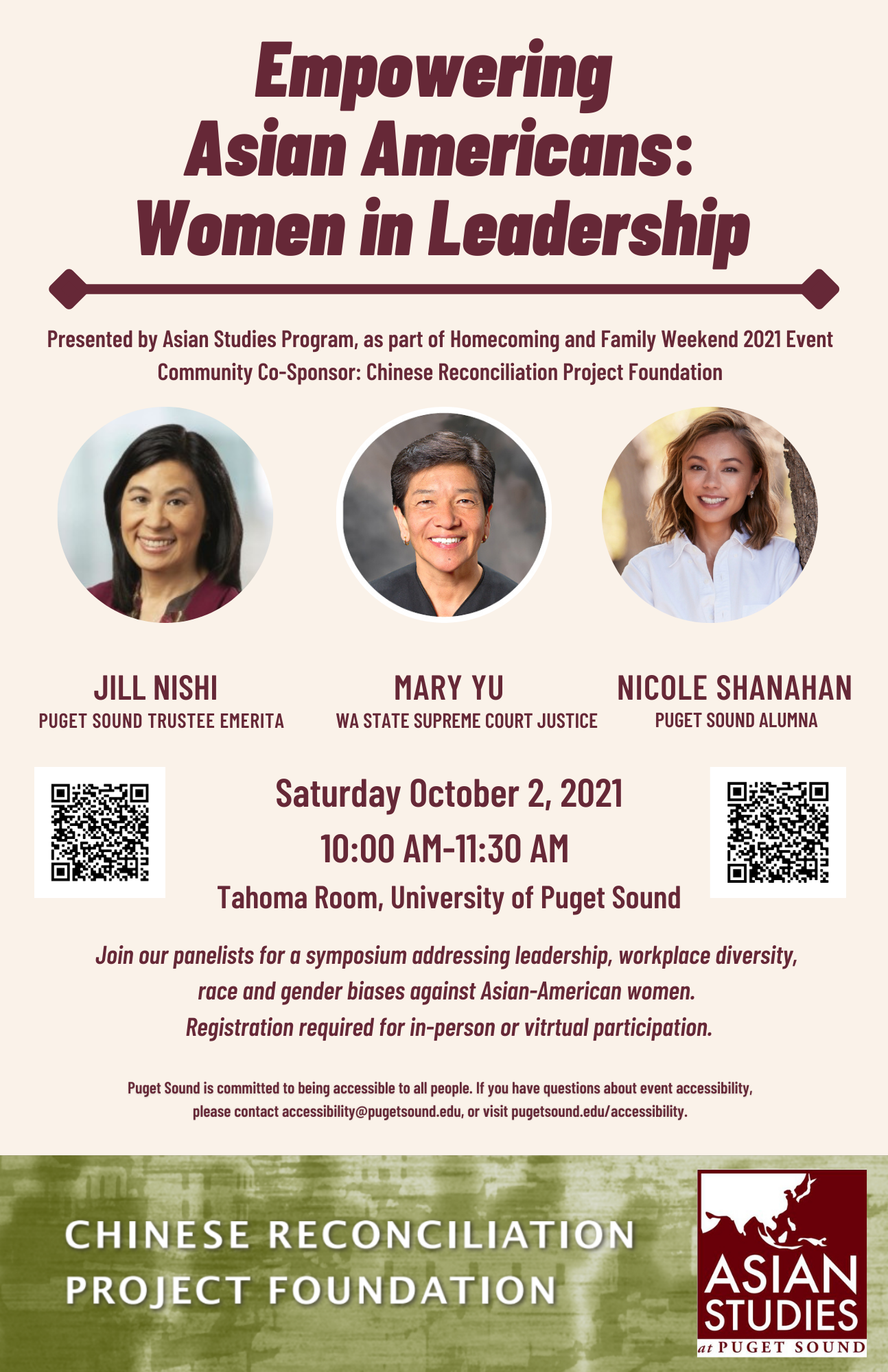
I am really excited to bring this symposium to my campus next weekend! I have worked hard for the past few months with a super talented team of colleagues at Puget Sound and at the Chinese Reconciliation Project Foundation! Recognizing the intersections of racial and gender biases against Asian American women, this symposium aims to share stories of challenges and triumphs in the lives of three accomplished Asian American women leaders, and engage our students and the community in a discussion about workplace diversity, breaking through the bamboo ceiling, and other race and gender related issues, particularly in light of the recent surge of anti-AAPI violence and racism.

Empowering Asian Americans: Women in Leadership
A SYMPOSIUM

10:00-11:30 am, Saturday, October 2
In Person @ Tahoma Room or Virtual Attendance
Featured speakers include: 

Puget Sound Trustee Emerita Jill Nishi ’89 | Bio
Washington Supreme Court Justice Mary Yu | Bio
Attorney and Entrepreneur Nicole Shanahan ’07 | Bio

Registration required for in-person or virtual attendance. Click here to register.

A Tribute to Ying Sun, 1957-2020

This short poem was composed in Chinese and translated into English by Ying two months before he turned 60; he called his motto:

耳順之後 After sixty,
返樸歸陋 Return to simplicity.
去繁除舊 Rid complexity and bad habits.
心闊體瘦 Stay light-hearted and fit.
言簡意透 Don’t babble; Be clear.
寬容勿究 Forgive; Never push too far.
無嗔無憂 No anger, no worry,
瞑念暢遊 Let the mind soar beyond boundary

As I reflect on Ying’s life, I re-translated this poem as a tribute, and I think it accurately describes my brother Ying in his final years.

After turning sixty
I no longer need much baggage around me
Removing the unnecessary and ridding the old
My body shrinks but my mind is about to explode
With fewer words I am now even more persuasive
Forbearing is the virtue and not to be plaintive
No worry no sorrow
Close my eyes with dreams into tomorrow

Here is a video clip of my tribute to Ying Sun.

Clean Tea and Mindful Drinking

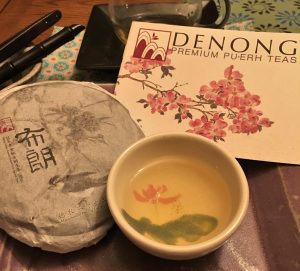
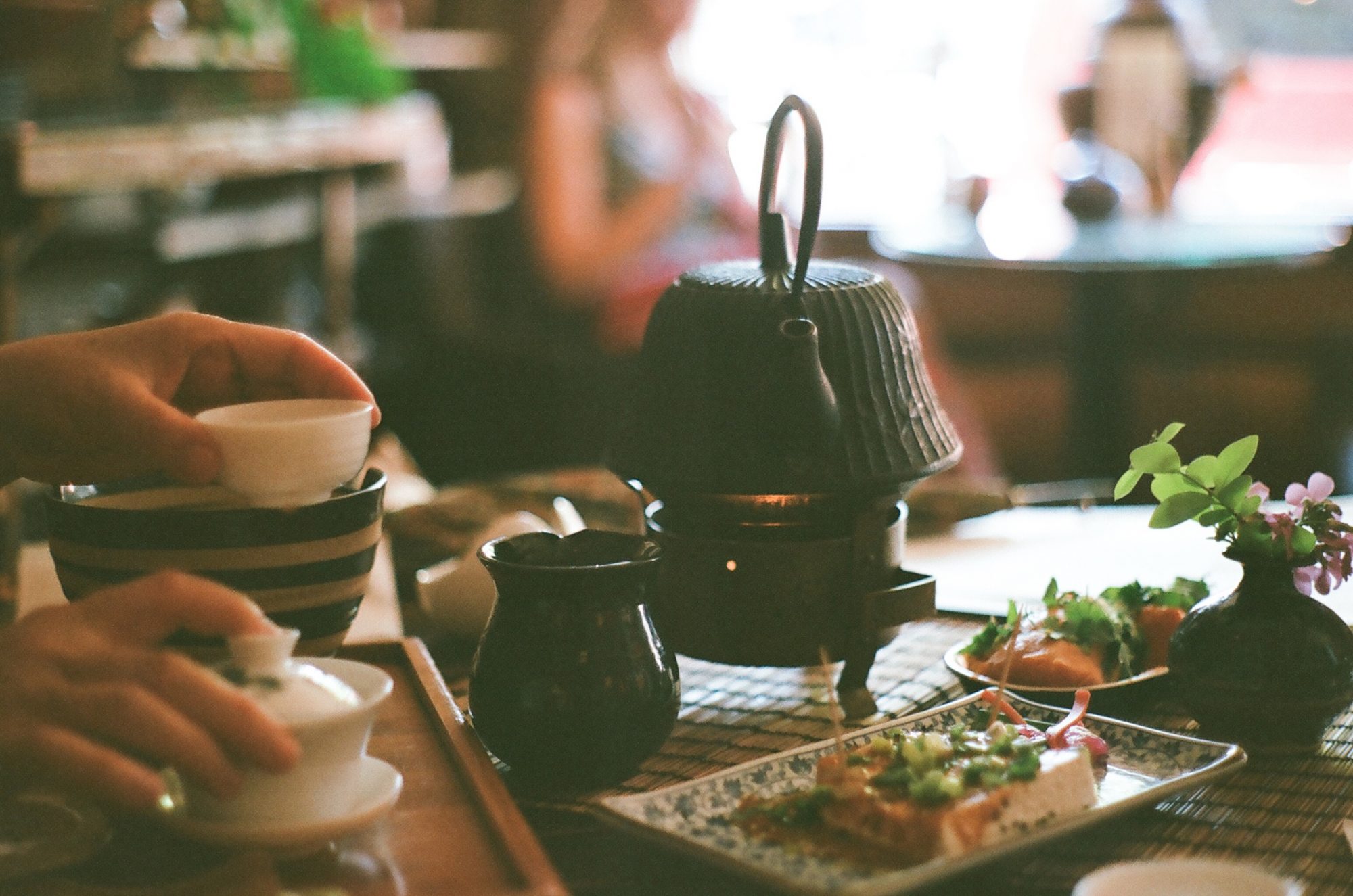
Jeffrey McIntosh teaches mindful drinking of good and clean Pu’er, a tea that is only grown in Yunnan with limited  supplies and complex economics.  I tasted the Bulang Raw Pu’er that was produced from Denong (德农 Dénóng) Premium Pu-erh Tea.  Coming from the ancient tea forest of Bulang Mountain (布朗山 Bùlǎng shān), this Pu’er is tender and delicate, with a light malt aroma that turns more fragrant and sweet after 5 to 6 brews. I only had time to brew a few times and probably was rushed in my preparation when I first tried it so the tea leaves did not open to offer their full flavor. I learned later that the honeyed fragrance and sweetness (回甘 huí gān) would come out much more profusely in later brews. 

My third try of this tea was with two other tea enthusiasts.Such delicate tea requires precision in brewing and accurate water temperature (185° F or 85 ° C – follow the instructions on the package). The three of us enjoyed 15 brews, and were pleasantly surprised by how the flavor lingers!

What a fabulous clean tea and rare find! (Denong’s packaging was also delightful!) When you have such a great tea, it is so important to brew it correctly, and take your time to sip and enjoy.

But shouldn’t I already know about mindful drinking? It requires patience, focus, and leisure, which many of us in our busy schedules just don’t have! I’m again reminded of the wisdom that Tang monk, Ling Yi (灵一), shared with us more than 1000 years ago:

野泉煙火白雲間,Amidst wild spring bonfire and misty clouds,
坐飲香茶愛此山。Sipping fragrant tea in this beloved mountain.
岩下維舟不忍去,My tied boat underneath the rock lingers,
青溪流水暮潺潺。Till dusk along the clear floating steam.

Drop in Chinese Enrollment Requires Serious Reflections

Co-curricular experiential & cultural learning experience

I have read  more reports and heard from more colleagues these two years that the Chinese program enrollment numbers have either plateaued or decreased. At my university, enrollment has remained in general strong, however, we did see one of our smallest incoming 1st-year language classes this fall. I hope it’s just a blip and the numbers will bounce back next fall, but as most private higher ed institutions are facing enrollment drop, the prospect of continuing growth in Chinese program is looking grim.  My university has invested the past 30 years to build a solid Chinese program, and as one of the senior faculty members, I feel particularly responsible to ensure the program’s continuing success.

Here are some of the advices I have gathered in my research and readings, given by fellow teachers, administrators and researchers in the field:

1. Rethink course goals for beginning learners: motivation to continue vs. developing linguistic accuracy and fluency;
2. Identify more ways inside and outside classroom to motivate and engage students in the process of learning Chinese as a foreign language;
3. De-mystify the myth that “Chinese is too hard to learn”; re-evaluate course design to mollify learner anxiety; 
4. Develop pedagogy and resources for making learning Chinese an intellectually stimulating educational experience;
5. Better address learning issues within a class or a program facing
overwhelming number of students of Chinese background;
6. Increase campus advocacy; come up with creative and doable ways to recruit students;
7. Make study abroad more accessible especially for STEM students, and more affordable for all;
8. Find ways to change negative views of China among young Americans, … or wait until China’s pop culture and pop stars to gain more global recognition.

Serious reflections & discussions of these issues will help all of us in the field to better cope and correct the trend. I look forward to attending the 3rd Chinese Innovation Forum  tomorrow to network with colleagues to share ideas and learn.

Reference articles:
–  American Students Lose Interest in China Studies,  Nikkei Asian Review, April 15, 2017
–  
Why is China so …Uncool? George Gao, Foreign Policy, March 8, 2017.
–  A New Era for Chinese for Chinese Language,  Jennifer Walker,  July/August 2016 issue of International Educator magazine. 
–   Issues in Chinese Language Teaching in Australian Schools, Jane Orton, Chinese Education and Society, 
Volume 49, 2016 – Issue 6.
–  Tasks and Learner Motivation in Learning Chinese as a Foreign LanguageYoujin RuanXiaoju Duan &Xiang Yun Du,  Language, Culture and  Curriculum, Volume 28, 2015 – Issue 2.

Silver Teapot

I have been in search of a good silver teapot for sometime. The Sage of Tea, Lu Yu,  more than 1,400 years ago, wrote about metal teapots, which were called “Fu” [鍑fǔ]. Fu was made out of cast iron, which was of course not the best materials for teapots . Porcelain and stone-made pots offer much cleaner inner surface but both are breakable, Lu Yu noted, and he praised silver pots as undoubtedly the best in this regard. “Silver tea pots are the cleanest.” [ 用銀為之,至潔,但涉於侈麗。] Silver is a rare metal and a luxury material for tea pots. It was true then and now.

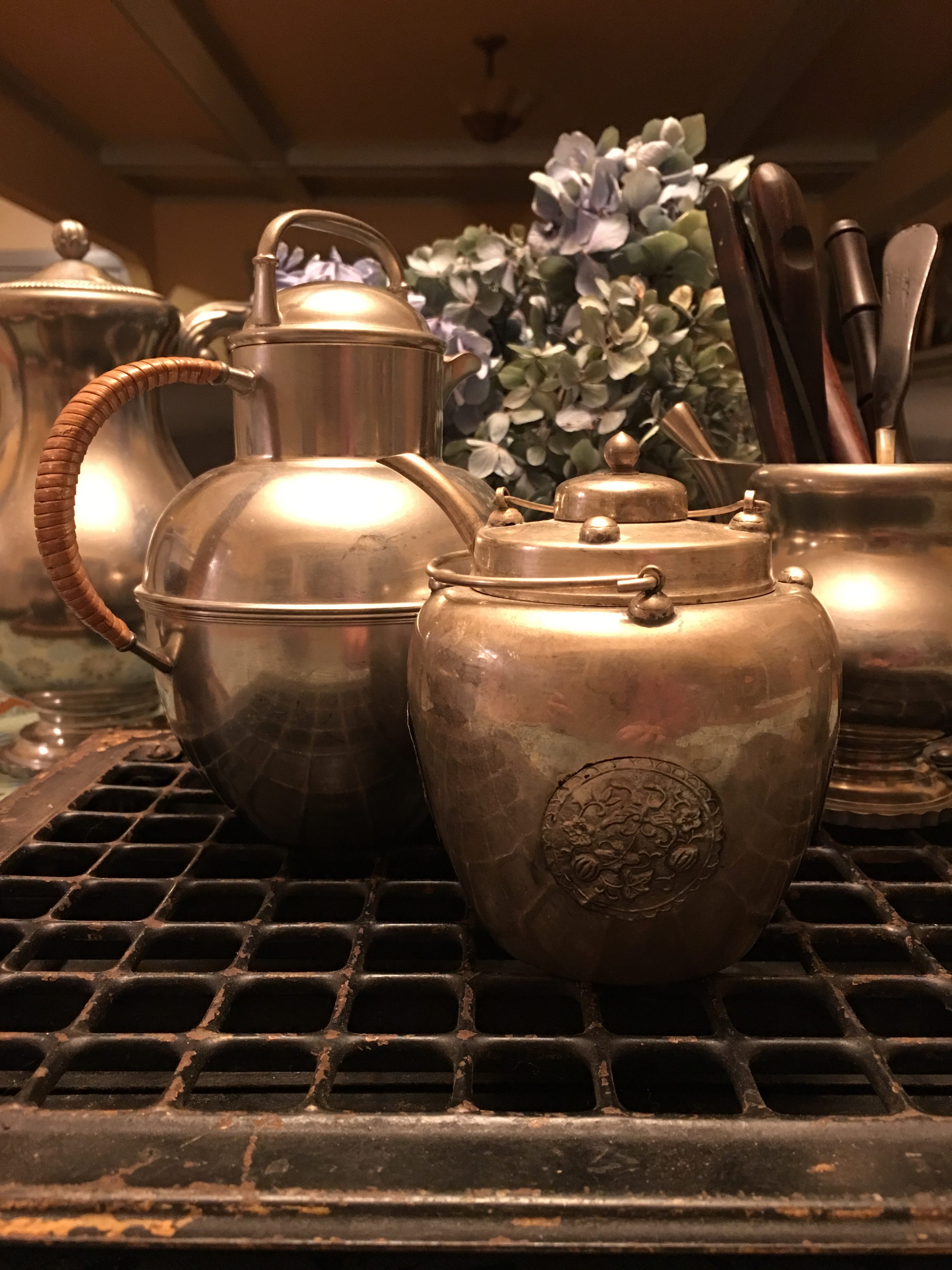
I still don’t own a good silver teapot but I do have a random collection of vintage metal tea and coffee pots. Many of them are early 1900 Dutch or American-made  pewter (錫鉛合金) pieces, which I use for decorative purpose while serving Chinese tea. Old pewter pieces are interesting to look at but not safe to use as they contain lead. Such incongruous mix-and-match of the East and the West, I have found,  actually adds interest to one’s tea appreciation experience.

Go to Solid Silver Tea Pot Buying Guide to learn more about how to select a quality silver pot for your taste and needs. Tea Master’s Blog has a great entry about brewing Chinese tea in silver teapots.

css.php